
Survey on Employment and Skills
The Survey on Employment and Skills is a multi-year research partnership conducted by the Environics Institute for Survey Research, in collaboration with the Future Skills Centre and the Diversity Institute.
It is designed to explore Canadians’ experiences with the changing nature of work, including technology-driven disruptions, regional and demographic disparities, increasing insecurity and shifting skills requirements.The project includes multiple waves of data collection starting from the winter of 2020 and is currently ongoing.
Wave 8: Tracking shifts in economic confidence, skills training and equity in the workplace
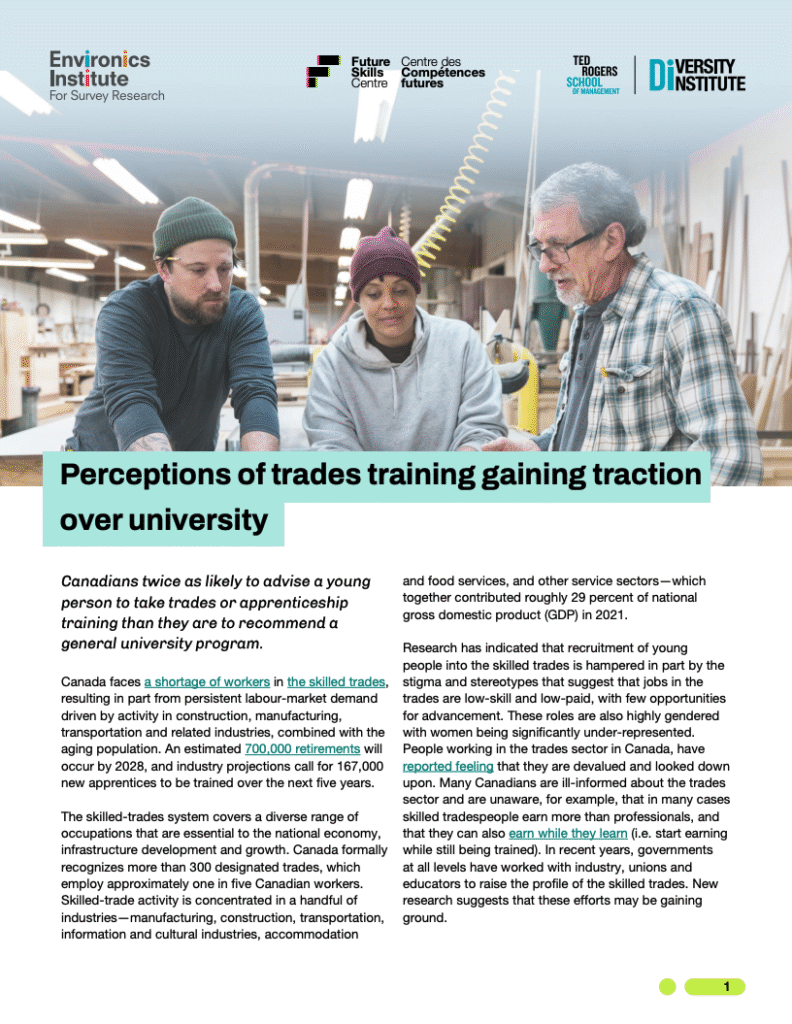
The eighth wave of the survey consists of 5,603 Canadians aged 18 and over, conducted between March – April 2025. This wave captures growing concerns around global trade relations, explores perceived fairness in economic advancement, the prevalence and value of skills training and attitudes towards diversity, equity and inclusion initiatives. This latest data helps illuminate shifting public sentiment about the future of work and the role of institutions in fostering inclusive economic participation.


Wave 7: Supporting workforce recovery and growth
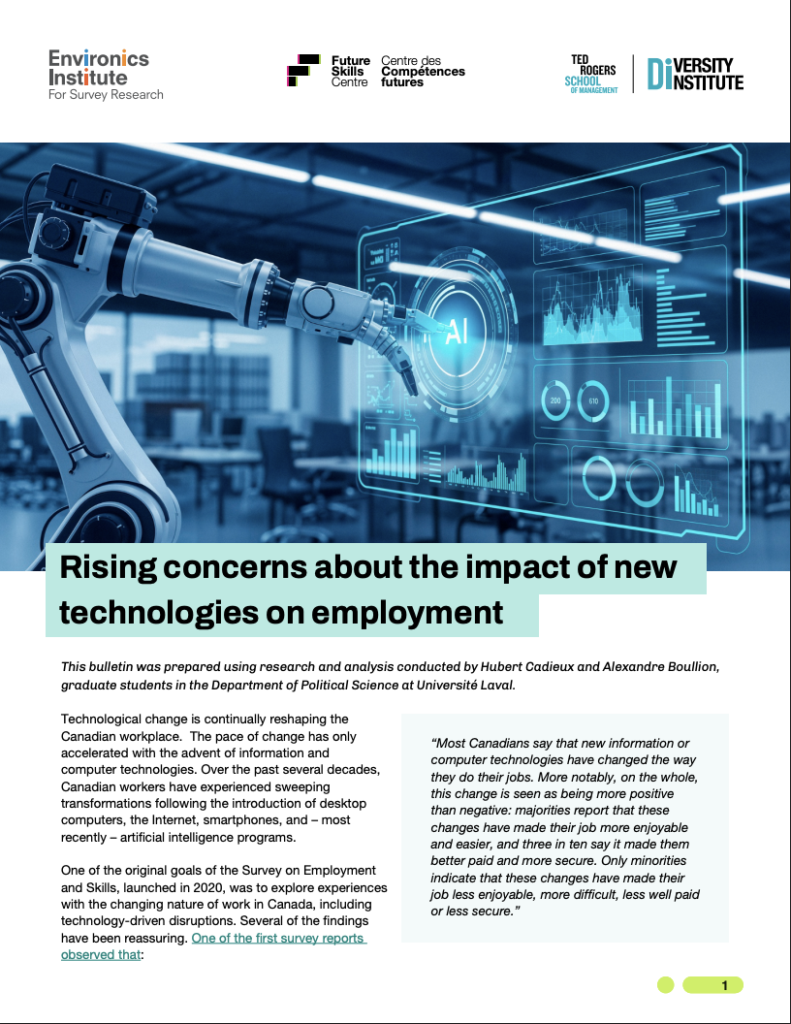
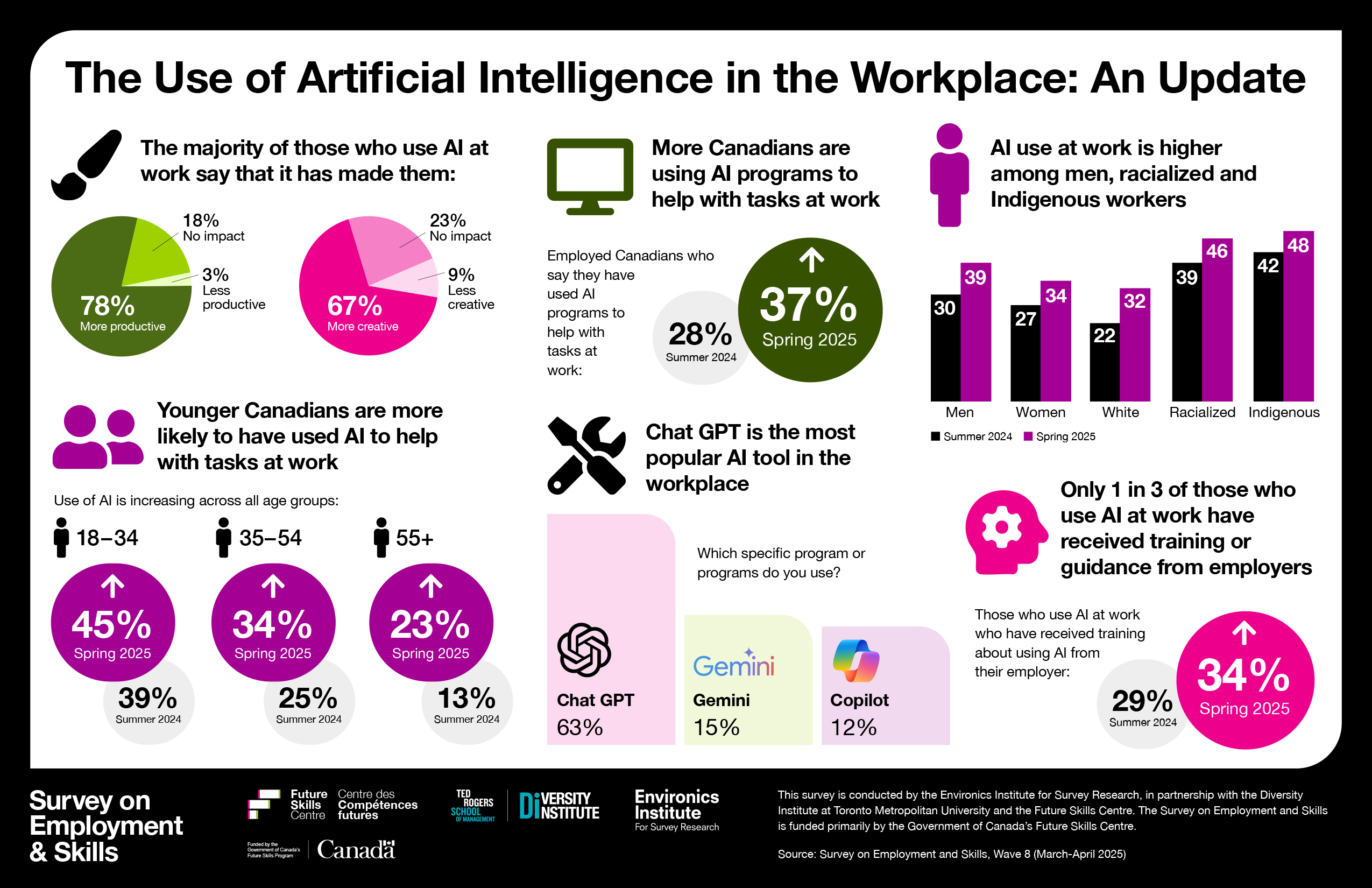
The seventh wave of the survey consists of 5,855 Canadians aged 18 and over, conducted between May to July 2024, in all provinces and territories. We provide an update on experiences with employment, skills training, technological change in the workplace, and flexible working arrangements. We also address new issues such as the barriers immigrants face landing work aligned with their training, the use of artificial intelligence programs, and the impact of having children on careers.



Wave 6: Workplace challenges and building opportunities
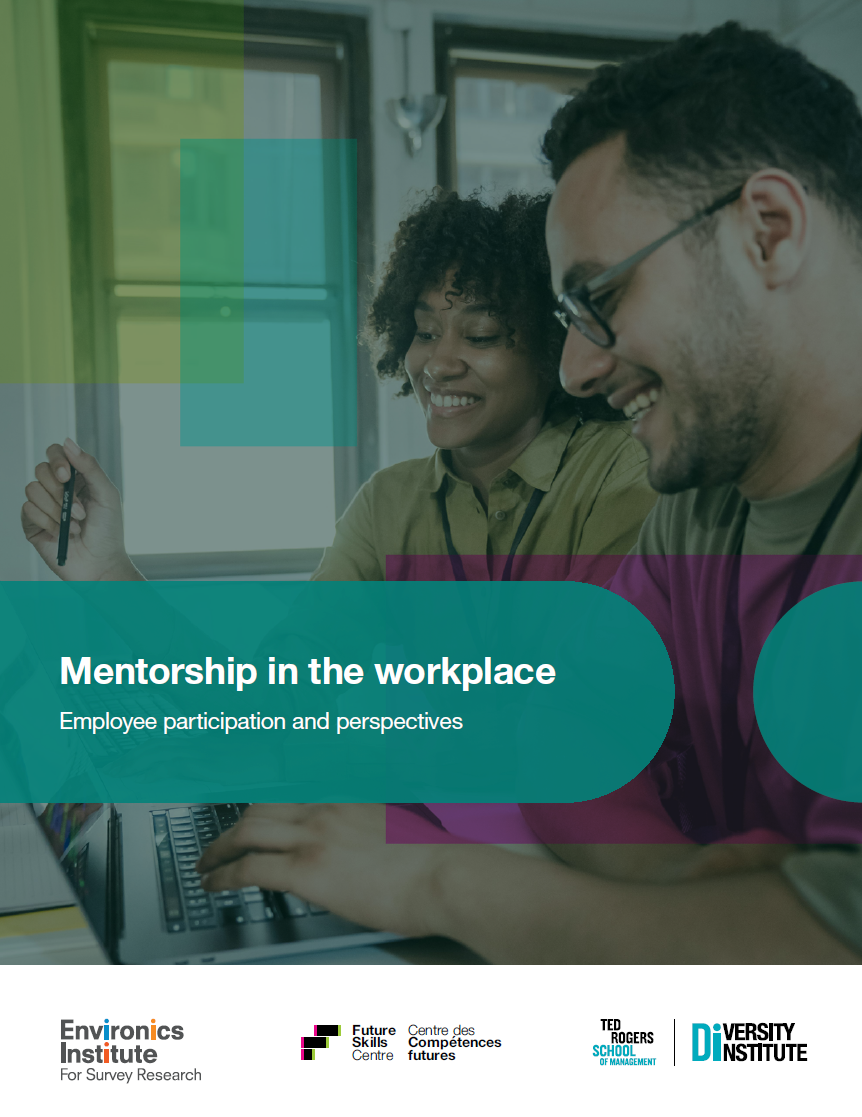
The sixth wave consists of 5,968 Canadians aged 18 and over, conducted between October 2023 to November 2023, in all provinces and territories. Results give insights into Canada’s entrepreneurial landscape, who has access to training and who pays for it, and impacts of long-term unemployment.


Wave 5: Adapting to a new normal
The fifth wave of the study consists of a survey of 5,904 Canadians aged 18 and over, conducted between March 2023 and April 2023. Three years after the start of the COVID-19, this wave revisits key issues to explore the pandemic’s lingering effects on Canadians and how participation in skills training have changed.

Wave 4: The shift in job priorities
The fourth wave of the study consisted of a survey of 6,604 Canadians aged 18 and over, between March 2022 and April 2022. This wave of the survey finds worker experiences have become more positive with the rise of remote and hybrid work.

Wave 3: Navigating the ongoing crisis – long-term implications for skills development
The third wave included a survey of 5,913 Canadians aged 18 and over and was conducted between June 1 to June 28, 2021. This wave explores the experiences of younger Canadians, and the disruptions and challenges workers face in the labour market one year after the onset of the pandemic.



Wave 2: Evolving workforce dynamics
The second wave of the survey was conducted between November 2020 and December 2020, with a sample of over 5,300 Canadians aged 18 and over. It examined which types of workers have been most adversely affected by the pandemic, with a particular focus on working parents, those living in urban areas with high rates of COVID-19 transmission, younger workers, workers with immigrant backgrounds, and racialized workers.



Wave 1: Understanding employment and skills trends in 2020
The initial wave of the survey was conducted between late February 2020 and early April 2020 and was designed to explore the experiences and attitudes of Canadians in relation to education, skills training and employment. The survey took place when the first effects of the COVID-19 pandemic became apparent in Canada and therefore offers an early view of how Canadians’ outlook initially shifted as the pandemic took hold.
Have questions about our work or would like to request access to the data, please contact communications@fsc-ccf.ca.
Related Content

Training to Retain: Strengthening the Role of Indigenous Community Health Workers

Automation technologies and Canada’s labour market: Measuring the totality of exposure