

Project Insights Report
Inshore Fishery Development in the Qikiqtani Region of Nunavut
 Partners
 Locations
Nunavut
 Investment
$1,180,000
 Published
May 2026
 Contributors
Gabrielle Dark
Laura McDonough

 Executive Summary
The Qikiqtani Region of Nunavut faces both significant opportunity and structural challenges as it seeks to expand community-based inshore fisheries. With isolated communities and a rapidly growing youth population, Qikiqtaaluk Corporation (QC) has prioritized creating accessible pathways into fisheries-related careers through hands-on learning, training, and internships. Phase 1 (2022–2023) and Phase 2 (2024) of QC’s youth engagement initiatives provided more than 30 high school students from Iglulik and Sanirajak with practical research experience, exposure to marine technologies, and opportunities to explore careers in the fishing industry. The 2024 Qikiqtani Futures Summer Internship Program, delivered in partnership with Coastal Explorers Field School, offered an intensive two-month learning and work placement that strengthened students’ awareness of fisheries careers, enhanced their technical skills, and fostered notable growth, confidence, and maturity.
Findings from the project highlight the need for sustained, long-term investment in youth training and stronger networks of community champions to support implementation. While students valued the experiences, many did not yet translate their interest into concrete career decisions, indicating that longer internships, follow-up support, and clearer apprenticeship pathways are needed. The project underscores that success must be defined collaboratively with communities and that approaches developed have relevance for other northern and Indigenous regions seeking to build local talent pipelines. QC continues to invest in emerging sectors, including renewable energy training and expanded research vessel capacity, demonstrating its commitment to helping Nunavut youth access meaningful, community-driven economic opportunities.
Key Insights
 More than 30 youth in Nunavut participated in training opportunities related to inshore fisheries.
 Although students viewed the training opportunities as positive and valuable, many required additional support to actively pursue related career paths.
 Sustained investment over a longer period of time is required to address skills gaps in sectors with potential, such as inshore fisheries.
 The Issue
The Qikiqtani Region in Nunavut comprises 13 communities with a population of nearly 20,000 people. These communities are geographically isolated, accessible only by boat or air, which presents unique economic and logistical challenges.
Qikiqtaaluk Corporation (QC) has identified an opportunity to expand inshore fisheries in the region. QC previously experienced success in developing the offshore fishery and sees potential for similar outcomes in inshore fisheries. However, the success of community-based inshore fisheries depends heavily on the availability of local talent equipped to lead development initiatives.
Given that Nunavut has a substantial youth population – approximately 10,000 Inuit youth are expected to complete their education within the next 5 years — there is a critical opportunity to engage these young individuals in the fishing industry. Introducing students to fishery-related career opportunities at the high school and primary levels will ensure they are aware of potential pathways in the inshore fishery sector.
QC is committed to creating meaningful economic, employment, and career development opportunities for the region’s communities. This commitment aligns with the principle of “nothing about us without us”, ensuring that development efforts are community-driven and inclusive. By partnering with local communities, QC aims to expand economic infrastructure, create employment opportunities, and implement innovative projects that support the development of inshore fisheries.
Inshore fishery opportunities vary by community, depending on available species, resource potential, commercial or subsistence potential, product forms, value-added opportunities, and community preferences.
 What We Investigated
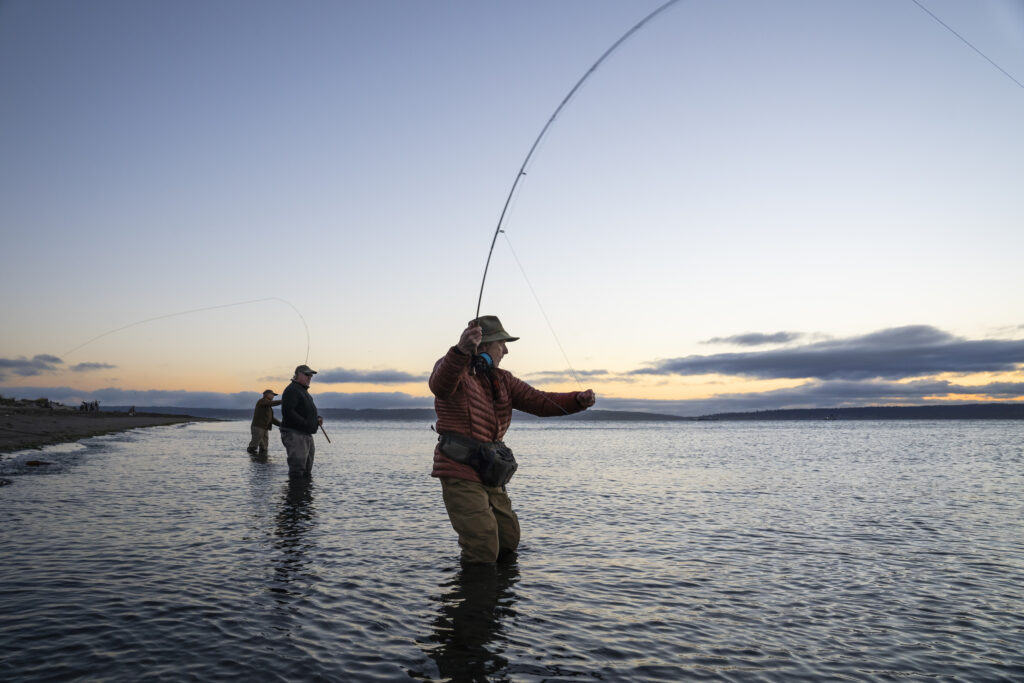
Phase 1 of this project, in 2022-2023, aimed to develop a pipeline of individuals trained to participate in inshore fishery employment and to build long-term career pathways in the sector. More specifically, the project aimed to attract young Inuit to explore career opportunities in the marine sector and to gain technical training for roles in research vessel operations, winter and summer fishing, and onshore fish handling and processing.
The project involved collaboration between the Fisheries Division of Qikiqtaaluk Corporation, Nunavut Arctic College, Memorial University of Newfoundland, Hunters and Trappers Associations in Iglulik and Sanirajak Iglulik High School and Arnaqjuaq School in Sanirajak, Marine Institute, Walsh Services, and Coastal Explorers Field School for research support.
Outreach strategies to attract partners and youth included engagement through hamlet and Hunters & Trappers offices, local Facebook groups, local radio broadcasts, youth and women’s groups, and health centres.
Students participated in fisheries research training, including practical, hands-on field experiences doing data collection, environmental DNA analysis, navigating aerial drones and conducting surveys using remotely operated vehicles. Youth participated in workshops and job shadowing aboard the research vessel Ludy Pudluk. Some returning participants received paid leadership positions leading activities and were supported to participate in the ArticNet Conference in Iqaluit, Dec 2023.
Technical training included identifying candidates interested in future out-of-community training opportunities for research and operational roles. Building on this experience, in 2024, the Fisheries Division of Qikiqtaaluk Corporation partnered with Coastal Explorers Field School on the Qikiqtani Futures Summer Internship Program for high school students in Iglulik and Sanirajak. This program offered a two-month paid educational and work experience to selected high school students from both communities. In late June 2024, students flew to Iqaluit, engaged in a week-long orientation with learning activities, and then flew to St. John’s, NL, for the 6-week internship. These experiences focused on science, fisheries, marine industry, eDNA and drone technology, career awareness/exploration, as well as some cultural and entertainment opportunities.
 What We’re Learning
Phase 1 (2022-2023) of the project included 24 students from Iglulik and Sanirajak. All students who were interviewed indicated that they had enjoyed the learning experiences and that they learned more from experiential or “hands-on” learning than in the classroom.
Phase 2 (2024) had 8 students, 4 from Iglulik and 4 from Sanirajak, participate in the Qikiqtani Summer Internship Program. Overall, the program was successful, offering a wide range of meaningful learning opportunities that students could clearly describe and connect to the needs of Nunavut. Many students applied what they learned to potential career paths and showed noticeable growth and maturity throughout the internship. This progress was supported by high-quality learning experiences and a collaborative, respectful environment that fostered strong relationships lasting beyond the program.
Longer-term investments needed
While students who participated in the initiatives found them to be positive and valuable, they did not necessarily take actions to pursue related careers. Administrators interviewed about the impact of the initiatives on students from Phase 1 felt that more specific apprenticeships or internships, in addition to experiences that raised their awareness, might help to close the gap between students’ initial interests and a more permanent working and learning experience. Follow-up is required on the longer-term impacts of the Qikiqtani Summer Internship Program to address this need.
Community champions are needed to implement on the ground
Many different partners were required to bring these opportunities to fruition. Teachers and other administrators in Iglulik and Sanirajak provided translation and logistics support, community space and resources, as well as knowledge about community cycles and events that would impact implementation. These connections are also invaluable to the ongoing support youth require to turn interest into action. However, tying the program’s success to only one or a few champions leaves the program vulnerable amidst change. Working to ensure relationships extend beyond individuals, into institutions like the schools themselves, is a way to foster resilience.
Community-defined outcomes do not always align with institutional ideas of success
While the initial aim of the project was to raise awareness and interest among youth in careers in the fisheries sector, partners had differing views of what counted as program success. Teachers and school administrators felt that success also included interest from young participants in any educational path or employment trajectory.
 Why It Matters
The challenges addressed in this project are not unique to the Qikiqtani Region, and the knowledge and approaches developed throughout this project have relevance for other northern and Indigenous communities looking to its young people to fill gaps. Regions such as Kitikmeot and Kivalliq in Nunavut, as well as other northern Canadian communities, can draw on these insights to inform their own development strategies.
These findings support QC Fisheries’ plans to offer longer internships and explore other ways to strengthen the connection between high school graduation and further education, apprenticeships, or internships, including targeting recent graduates who are in the “waiting period” after finishing school. In small communities, schools remain in close contact with these students and can easily reach them to make them aware of additional training and educational opportunities.
This project also demonstrates the need for sustained investment to develop the necessary workforce for sectors with potential, such as inshore fisheries. A few discrete training programs are not sufficient, young people need multiple opportunities over a period of time, alongside personal support to pursue their interests in further training or education. Raising awareness is not enough.
State of Skills:
Supporting Indigenous and Northern Entrepreneurship and SMEs
Indigenous and Northern entrepreneurship and businesses play a crucial role in bolstering local economies by supporting economic diversification, job creation and community development.
Beyond fisheries, the project’s learnings have broader implications for Indigenous community economic and social development in other emerging sectors. Insights gained from this project can support efforts in sectors such as mining, social enterprise, and digital technology, where community-driven economic growth is key.
 What’s Next
QC continues to look for opportunities to support youth in developing skills in growing sectors in Nunavut. In Spring 2025, it implemented an Assistant Wind Turbine Technician Training Program, with eight youth and two chaperones participating in hands-on training in Sanikiluaq and Gaspé, Quebec.
QC Fisheries made the purchase of a 2nd research vessel, RV Moses Appaqaq, in addition to Ludy Pudluk, which it intends to use to offer more opportunities for youth to be trained in hands-on research.
Have questions about our work? Do you need access to a report in English or French? Please contact communications@fsc-ccf.ca.
More from FSC
Supporting Mid-Career Workers in Retail and Meat Processing

Reimagining Career Services

Two-Eyed Seeing Network
How to Cite This Report
Dark, G. and McDonough, L. (2025). Project Insights Report: Inshore Fishery Development in the Qikiqtani Region of Nunavut, Qikiqtaaluk Corporation. Toronto: Future Skills Centre. https://fsc-ccf.ca/projects/inshore-fishery-nunavut/

Inshore Fishery Development in the Qikiqtani Region of Nunavut is funded by the Government of Canada’s Future Skills Program. The opinions and interpretations in this publication are those of the author and do not necessarily reflect those of the Government of Canada.