

Project Insights Report
Mapping Food Sustainability in Canada
 Partners
 Locations
Across Canada
 Published
June 2026
 Contributors
Report authors:
Wendy Cukier, Founder and Academic Director – Diversity Institute, Professor, Entrepreneurship & Innovation, Toronto Metropolitan University
Bryant M. Serre, Senior Research Associate – Diversity Institute
Andrey Kasimov, Senior Research Associate – Diversity Institute
Contributors:
Aishah Patel, Research Assistant – Diversity Institute
Sam Hampton, Senior Researcher – Environmental Change Institute, Oxford University

Mapping Food Sustainability in Canada
 Executive Summary
Canada’s agriculture sector is struggling to attract new and diverse talent and address local food insecurity. Many Indigenous Peoples and equity-deserving groups do not participate in the sector, and are food insecure, revealing significant gaps between agricultural output, sector participation, and equitable access to food. Community food production through gardens and greenhouses has gained traction to address food insecurity, and offer skills pathing and sector visibility for agriculture and agrifood careers.
While numerous programs exist, there is not a unifying understanding of program offerings, geographic, and demographic coverage and thus their contributions to the agriculture skills training ecosystem. We mapped the current ecosystem of food sustainability initiatives and sought to collect and compile the current coverage of food sustainability programs in Canada. We analyzed what training programs offer, if any, as well as the targeted interventions for Indigenous Peoples and equity-deserving groups.
We present several recommendations for food sustainability programs, considering unique barriers to participation for Indigenous Peoples and different equity-deserving groups. We identified opportunities to upskill where agricultural technologies can be further integrated into food programs. Further, we recommend regional priorities for upskilling, support, and educational participation wraparound supports, considering the differences in the cultivation environment and agriculture and agrifood sector across Canada’s North, urban environment, as well as rural and remote growing environments.
Key Insights
 Food sustainability programs predominantly offered foundational skills programs (78% of initiatives) showcasing basic gardening and cultivation skills, with a depreciating focus on analytical skills training (e.g., operations management) in about two-thirds of programs, and less than 50% providing technical training in advanced agricultural technologies (e.g., use of sensors or greenhouse technologies).
 Targeted programming for equity-deserving groups in food sustainability programs shows important but uneven patterns, with Indigenous Peoples in urban areas, rural women, immigrants and newcomers, and 2SLGBTQ+ people underserved relative to other equity-deserving groups.
 Food sustainability program offerings vary geographically, with Ontario hosting the largest share of initiatives, accounting for nearly 30% of programs, while Quebec and Alberta are underrepresented, despite the relative contribution of their population to the sector.
 The Issue
Canadian agriculture is closely tied to the country’s prosperity and food security. While Canada is a major agricultural exporter, the sector is struggling to attract new and diverse talent. Many Indigenous Peoples and equity-deserving groups do not participate in the sector, and are food insecure, revealing significant gaps between agricultural output, sector participation, and equitable access to food. For instance, about 46% of Indigenous Peoples experience food insecurity, and Black households have about double the odds of being food insecure than white households. Simultaneously, urban food insecurity has surged, with over 2 million Canadians now using food banks and related supports monthly.
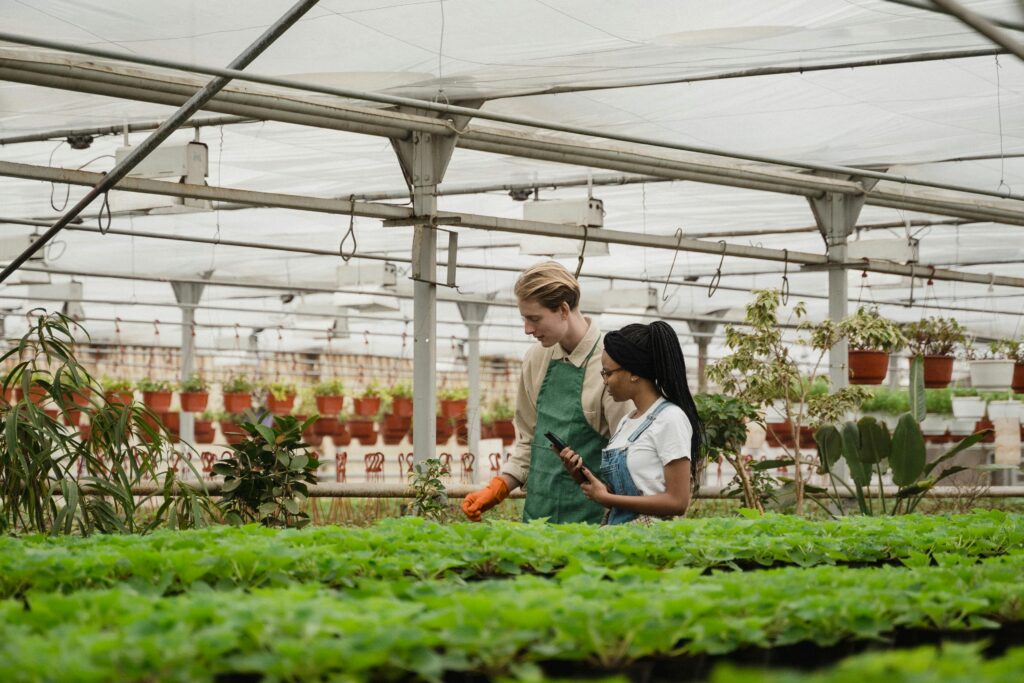
Community-based food production through gardens and local greenhouses has gained traction to address food insecurity. While addressing local food insecurity, gardening and food production are not just about access to food. These programs and community initiatives are essential in skills pathing and improving sector visibility for agriculture and agrifood careers. These programs can ensure food security, address sector barriers to participation, and improve technology adoption among Indigenous Peoples and equity-deserving groups across rural, urban, and remote environments.
Numerous food sustainability programs exist, but there is not a unifying understanding of program offerings, geographic, and demographic coverage. Ultimately, these programs’ contributions to the agriculture skills training ecosystem are unclear. There is an urgent need to expand sustainable food initiatives, embed equity considerations, and develop the skills required to maintain and grow local food production capacity.
 What We Investigated
We sought to collect and compile the current coverage of food sustainability programs in Canada. We conducted an ecosystem mapping exercise of initiatives, using targeted internet searches and snowball sampling, and classified them according to geographic distribution, organizational type, and the types of skills training offered.
In particular, we asked “What skills training, if any, do food sustainability programs offer?” We classified offerings across three categories. First, foundational training included teaching participants how to garden, usually from seed to harvest, and general farm practice and maintenance. Second, analytical training included operational skills, management skills, soil science, farm machinery operation, pest management, and agriculture and agri-food sector soft skills, such as training in time management, management, and logistics. Third, technical training was the use of agricultural technologies (or agtech), including vertical farming systems, sensors, and data-enabled farm management.
We also asked, “Who are the target audiences of food sustainability programs, and where?” We noted programs with targeted interventions designed for Indigenous Peoples, women, immigrants and newcomers, 2SLGBTQ+ participants, persons with disabilities, and other equity-deserving groups. We looked for differences in geographical coverage and extent of programs.
 What We’re Learning
Through our food sustainability program mapping, we compiled a total of 228 programs, revealing a variable landscape of food sustainability programs in terms of skills offerings, target participant demographics, and geographic coverage.
Skills offerings across programs were variable and weighed toward foundational skills programs. About 78% of initiatives included foundational skills training, making these programs important entry points to the agriculture sector for participants. Analytical training is present in about two-thirds of programs, while less than half provide technical training in advanced agricultural technologies. Regional differences in skills offerings were pronounced, with Prince Edward Island and Nova Scotia emphasizing technical upskilling, and other eastern provinces in Newfoundland and Labrador and New Brunswick focusing on foundational training. Technical training opportunities are strongest where community greenhouses and modular farms are in use, such as in northern and urban contexts, but remain limited in regions with otherwise high agricultural activity that use traditional garden or community plot programs.
Targeted programming for Indigenous Peoples and equity-deserving groups shows important but uneven patterns. Indigenous Peoples have significant programming opportunities in the territories, but urban Indigenous Peoples have fewer supports. Women are less supported, despite their strong role in emerging agtech and urban farming. Immigrants and newcomers are similarly underserved, with few programs tailored to their needs even in provinces with large immigrant populations such as Ontario, British Columbia, and Alberta. Very few initiatives explicitly target 2SLGBTQ+ communities or people with disabilities, despite research identifying adverse barriers to participation in food production. However, general wraparound support may indirectly benefit equity-deserving groups to participate.
From our research, we identified various regional opportunities to improve food security and skills pathing. Training opportunities in Quebec and Alberta should be prioritized, considering program deficits relative to sector participation rates, which may address elevated food insecurity in these regions. In particular, to engage women, programs in the Prairies should emphasize integrating agtech used in oilseed and grain commodity operations, and in Ontario, more support is needed for supporting analytical skills acquisition, which can be transferred to meet operation management and succession planning needs. For immigrants and newcomers in Alberta, improved technical and analytical skills training is needed to bolster their participation, which differs from the interventions needed in Ontario and British Columbia, where support is still needed to promote sector entry and visibility of agtech, digital skills, and technical careers. Indigenous Peoples in the North and on community and reserve are where this community is supported, but there is a lack of infrastructure and programs for urban Indigenous Peoples. In urban areas, more skills training is needed to meet Indigenous Peoples where they are and promote food sovereignty and local food production while providing opportunities for skills training.
 Why It Matters
Canada needs to address growing food insecurity, improve agriculture and agri-food sector participation, and continue to offer skills pathing to more technologically-enabled farming operations.
The ecosystem mapping exercise shows a wide range of initiatives that target food security and sustainability, many of which include skills training components. We found many programs offer foundational training, though upskilling opportunities are limited. Additionally, where programs provided concerted support to Indigenous Peoples and equity-deserving groups, we found community definitions of healthy and sustainable food are not always included. Further, the group supported does not always match community composition, thus leaving some communities undersupported and underrepresented in the sector.
Predominantly, these include women, immigrants and newcomers in rural environments, and Indigenous Peoples in urban contexts. At the same time, there is a gap in addressing the pressing issues related to skills and employment in the sector, and to continue growing community-based initiatives, which, for many diverse program participants, is their exposure to agricultural sector careers. We present several recommendations to improve programs and improve their skills pathing capacity.

State of Skills:
Resilient by Design: The Skills Canadians Need Now and for the Future
To build a resilient workforce that is able to respond to and adapt to changing labour markets, whether due to unpredictable disruptions or longer-term transitions, we need a range of training and upskilling pathways that equip people with the skills they need to enter, advance, transition and return to dynamic labour markets.
First, programs targeting women in non-greenhouse environments should prioritize agtech adoption and technical skills acquisition and thus address gendered stereotypes that men farm and women garden. For immigrants and newcomers, programs need improved visibility and use of agtech, digital tools, and technical specializations to help encourage their transition into skilled sector opportunities.
Several agtech producers are making scalable technologies, and these should be integrated into food sustainability operations to improve low visibility among diverse sector participants. Additionally, programs should leverage post-secondary institutions and ‘innovation hubs’, as partnerships with postsecondary educational institutions and non-institutional educational partners can improve the diversity and effectiveness of skills training offerings.
Improved upskilling offerings are needed in traditional food programs like garden plots and community gardens, such as using environmental sensors for soil and air moisture, temperature monitoring, and vision-based systems for crop, disease, and pestilence monitoring.
Regional sector foci should be adopted into food sustainability programs. For instance, women in the Prairies need training applicable to oilseed and grain commodity crops, whereas women in Ontario need analytical skills training to meet operational management and succession planning. For immigrants and newcomers in Alberta, skills pathing is needed for non-labour-intensive roles such as service contractors and farm supervisors, whereas in Ontario and British Columbia, fundamental sector visibility is first needed. Indigenous people in urban areas are underprioritized relative to communities on reserve or in remote environments.
Given the variety of different skills offered by food sustainability programs, a unifying competency framework is needed to understand how foundational skills can be upskilled into analytical and technical skills. Participation in an agtech transition will also require additional competencies in Artificial Intelligence, data management, and digital skills to ensure communities have foundational literacy and tools to engage with agtech.
Finally, many programs address food sustainability, but do not include or record the demographic details of participants. Improved program evaluation is needed to capture the experiences of Indigenous Peoples and other equity-deserving groups.
More from FSC
Tech Futures Initiative

What Are Canadian Post-Secondary Institutions Saying and Doing? Social and Emotional Skills

Artificial intelligence and the future of work: What do we know so far?
Have questions about our work? Do you need access to a report in English or French? Please contact communications@fsc-ccf.ca.
How to Cite This Report
Diversity Institute. (2026) Project Insights Report: Mapping Food Sustainability in Canada: Addressing food insecurity and skills-pathing to the agriculture sector. Toronto: Future Skills Centre. https://fsc-ccf.ca/research/mapping-food-sustainability-canada/

Mapping Food Sustainability in Canada is funded by the Government of Canada’s Future Skills Program. The opinions and interpretations in this publication are those of the author and do not necessarily reflect those of the Government of Canada.