

Project Insights Report
Decarbonization of SMEs: A Comparative Analysis of Canada and the United Kingdom
 Partners
 Locations
Across Canada
 Published
November 2026
 Contributors
Report authors:
Wendy Cukier, Sam Hampton,
Bryant M. Serre
Decarbonization of SMEs: A Comparative Analysis of Canada and the United Kingdom

 Executive Summary
Small and medium-sized enterprises (SMEs) play an important role in meeting Canada’s and the United Kingdom’s net-zero goals, but many lack the resources and expertise needed to reduce emissions. Their challenges differ by business size, sector, ownership and location, while existing data and support programs do not always reflect these differences.
This study reviewed evidence from Canada and the UK to understand how SMEs participate in decarbonization, the barriers they face, and how policies respond to their needs. We found that, among SMEs, larger businesses generally reported higher participation than small businesses in activities such as adopting clean technologies in Canada and measuring emissions in the UK. However, some SMEs owned by equity-deserving groups report higher participation in certain environmental practices than SMEs overall. For example, 26% of women-owned SMEs reported using recycled materials, compared with 20% of SMEs overall. These findings also show differences across sectors and regions. Of the 43 Canadian decarbonization policies and programs reviewed, 11 (about 26%) included targeted or additional support for diverse majority-owned businesses.
The findings suggest that effective support should reflect the circumstances of different SMEs. Practical training needs to be connected with financing, technical advice and accessible support programs. Better data and evaluation can also help identify which approaches work for different businesses.
Key Insights
 In total, 11 of the 42 (26%) Canadian programs reviewed had an Equity, Diversity and Inclusion-related or other targeted focus, including support for Indigenous groups, equity-deserving groups, and rural or remote communities.
 Training can help SMEs understand how to reduce emissions, but they may also need financing, technical advice and help accessing support programs to put that knowledge into practice.
 Some SMEs owned by equity-deserving groups report higher participation in specific environmental practices than SMEs overall, such as using recycled materials (26% of women-owned SMEs versus 20% of all SMEs) and adopting sustainable processes (19% of Indigenous-owned SMEs versus 13% of all SMEs). However, participation also varies by ownership, sector, business size, and location.
 The Issue
Canada and the UK have committed to achieving net-zero greenhouse gas emissions by 2050. SMEs have an important role in meeting these commitments. SMEs account for more than 99% of businesses in Canada and approximately 99% in the UK, and almost half of business-related greenhouse gas emissions in both countries. Yet many SMEs, particularly microbusinesses, lack the staff, capital and specialized expertise needed to measure emissions, assess clean technologies, navigate funding and change everyday operations. Rural SMEs may face additional challenges accessing skilled workers, financing, infrastructure and specialized expertise.
The barriers and opportunities also differ by business size, sector and ownership. SMEs owned by women, Indigenous Peoples, immigrants, racialized groups, persons living with disabilities and other equity-deserving groups operate in different economic contexts and may face unequal access to financing, expertise and support. Yet decarbonization data are rarely linked to business ownership, making it difficult to determine where barriers are greatest, who accesses assistance and what approaches work. Only 11 out of 42 (about 26%) Canadian decarbonization policies and programs reviewed included targeted or additional support for businesses majority-owned by equity-deserving groups, and skills training was limited. These gaps highlight the need to examine how SME decarbonization differs across Canada and the UK and how support can better reflect the realities of different businesses.

 What We Investigated
The study examined how SMEs in Canada and the UK take part in decarbonization, focusing on businesses owned by equity-deserving groups. It asked five questions: What role do SMEs play in decarbonization? What helps or prevents them from planning a transition? What role do equity-deserving SMEs play, and do they have distinct needs and capabilities? How well do policies in each country address those needs? And how can support become more inclusive and effective?
The research drew on academic studies, policy and industry reports, government surveys, census data and regional datasets. It also used Canadian survey and interview evidence from research involving the Canadian Council for Indigenous Business, Coralus and BMO, and data from the UK’s Low Carbon Across the South and East (LoCASE) program, which supported more than 1,200 businesses from 2016 to 2023.
These sources were combined to examine differences by ownership, sector, business size and region. Because Canada and the UK use different definitions and measures, the analysis focused mainly on patterns within each country, with cross-country comparisons where the evidence allowed.
 What We’re Learning
The findings show that SME decarbonization varies by business size, sector, ownership and location. Business size matters. In Canada, 5.1% of businesses with 1–4 employees reported adopting clean technology in 2023, compared with 23.7% of those with 100–499 employees. In the UK, 10% of sole proprietors measured all or part of their carbon footprint in 2025, compared with 51% of businesses with 50–249 employees. These measures differ, but both point to greater involvement in these activities among larger businesses.
Sector also shapes participation. In Canada, clean technology adoption was highest in manufacturing (15.7%) and lower in several service industries (about 5.2%). In the UK, 57.7% of SMEs in education, 56.7% in real estate and 54.1% in accommodation and food services reported taking emission-reduction action. These are different indicators; the Canadian and UK figures cannot be directly compared. Sectoral differences matter for equity because, in Canada, women-owned SMEs and SMEs owned by racialized people are more represented in certain service sectors, while Indigenous-owned SMEs are more represented in construction and primary industries.
Some SMEs owned by equity-deserving groups report higher participation in certain environmental practices than SMEs overall. In Canada, 26% of women-owned SMEs reported using recycled materials, compared with 20% of SMEs overall. Indigenous-owned SMEs were more likely to report using sustainable processes (19% versus 13%). SMEs owned by persons with disabilities were more likely than SMEs overall to report reducing energy consumption (50.7%) and water consumption (22.7%). In the UK’s LoCASE program, women-owned and ethnic minority-owned SMEs accounted for higher shares of applicants and grant recipients than their shares of the SME population used for comparison.
However, formal practices remain uncommon. Only 4% of Canadian SMEs reported measuring their carbon footprint, 3% had environmental certifications, and 2% had audited their environmental practices.
Rural businesses are not necessarily less engaged: in one UK study, 59% of rural enterprises reported taking steps to reduce emissions, compared with 56% of urban enterprises. However, rural firms can face difficulties accessing skilled workers and expertise.
Support remains uneven. The research reviewed 43 Canadian decarbonization policies and programs, but only about 26% included targeted or additional support for diverse majority-owned businesses. Skills training was limited, and UK support varied by region. Both countries also lack consistent data linking environmental action with business ownership, making it difficult to identify who faces barriers, who accesses support and which approaches work.
The findings point to a need for practical green skills, including emissions measurement, technology assessment and navigating financing and support programs. The report concludes that skills development must be linked with financing, technical advice and other practical support.
 Why It Matters
Small businesses have an important role in meeting Canada’s and the UK’s net-zero goals, but their needs differ depending on their size, sector, ownership and location. Some SMEs owned by equity-deserving groups are already active in environmental practices. Support should reflect what different businesses actually need and help them turn these efforts into lasting emissions reductions.
The findings show why the same support program may not work for every business. In Canada, SME programs commonly offer energy audits and technical assessments, while funding often focuses on smaller improvements such as LED lighting, smart thermostats and basic HVAC upgrades. A small service business, a rural manufacturer and a business in a remote community may need different types of financing, technical advice and training. Working with SME associations, Indigenous organizations, regional business networks and community partners can help programs respond to these differences and reach businesses that might otherwise be missed.
For skills training providers, teaching general environmental knowledge is not enough. SMEs need practical skills to measure emissions, understand which technologies are suitable, find available funding and introduce changes into their daily operations. Training also needs to be accessible to smaller businesses with limited staff and technical expertise. Even when business owners know what needs to change, they may still need financing and expert advice to make those changes.
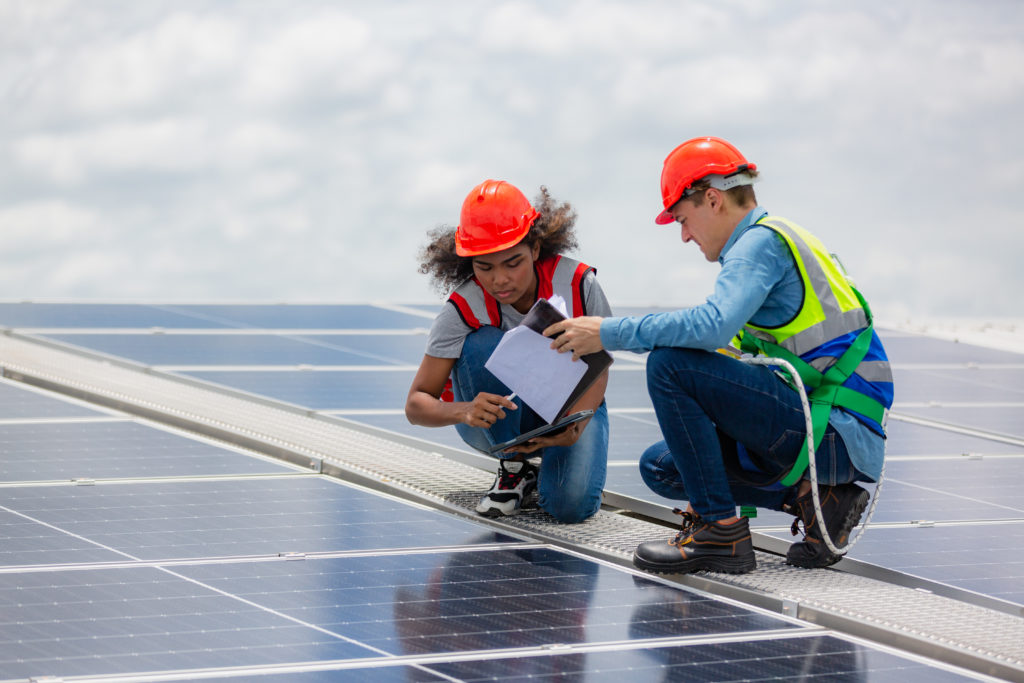
State of Skills:
Sustainable Jobs for Economic Growth
Green-related skills and knowledge are growing in significance and are becoming widespread across many sectors and occupations, requiring more workers to upskill by building upon their existing competencies.
Governments and funders also need better information about SMEs. In Canada and the UK, environmental data are often available by business size, sector or location, but are rarely linked consistently to business ownership. This makes it difficult to understand which businesses face barriers, who receives support and which programs are effective. Better data and regular program evaluation can help governments design more suitable support. The review of Canadian programs also found limited targeted support for diverse majority-owned SMEs and limited skills training.
Overall, helping SMEs reduce emissions requires more than technology or training alone. Businesses need practical skills, access to financing, technical advice and help finding suitable support programs. These forms of assistance should work together and reflect the different circumstances of SMEs.
 What’s Next
The findings provide opportunities to improve SME decarbonization support through skills training and business support. Skills training providers, business associations and regional partners could use the research to develop more accessible, practical green-skills training, particularly in emissions measurement, reporting and green-technology assessment.
These initiatives could combine training with support in accessing financing, technical advice and assistance in navigating available programs. Governments and funders could also improve data collection and program evaluation to identify which approaches work for different SMEs.
Working with Indigenous organizations, SME associations and community networks could help ensure that future initiatives reflect local needs and reach businesses that may otherwise be missed.
Decarbonization of SMEs: A Comparative Analysis of Canada and the United Kingdom
More from FSC

Reimagining Career Services

Harnessing the digital economy for women of colour in Canadian undergraduate STEM programs
Hiring green: An analysis of the demand for green skills in Canada
Have questions about our work? Do you need access to a report in English or French? Please contact communications@fsc-ccf.ca.
How to Cite This Report
Cukier, W., Hampton, S., & Serre, B. (2026). Project Insights Report: Decarbonization of SMEs: A Comparative Analysis of Canada and the United Kingdom. Toronto: Future Skills Centre. https://fsc-ccf.ca/research/decarbonization-of-sme/

Decarbonization of SMEs: A Comparative Analysis of Canada and the United Kingdom is funded by the Government of Canada’s Future Skills Program. The opinions and interpretations in this publication are those of the author and do not necessarily reflect those of the Government of Canada.