

 Partners
 Locations
Alberta
British Columbia
Newfoundland and Labrador
Ontario
Saskatchewan
 Investment
$8,169,540
 Published
August 2025
 Contributors
Author: Miles Kenyon, BP
Approver: Laura McDonough

 Executive Summary
The current employment system often pushes job seekers with complex barriers into work or training before their foundational needs are addressed, creating a recurring cycle of unmet needs and repeated service use.
Early evidence from multiple evaluation phases—including a randomized controlled trial—shows that In Motion & Momentum+ (IM&M+), a pre-employability program developed by the Canadian Career Development Foundation, effectively interrupts this cycle. IM&M+ reaches individuals distant from the labour market, delivers high participant satisfaction, and is implemented with strong fidelity despite recruitment and support challenges. The program demonstrates causal improvements in critical pre-employability skills—such as employment hope, emotional regulation, and mental health—and increases participants’ employment rates more than comparable services, highlighting gaps in the existing public employment ecosystem.
These findings underscore the importance of investing in pre-employability programming as a core pillar of an inclusive and effective employment system. IM&M+ offers a scalable, evidence-based model for building psychological readiness, foundational skills, and motivation among job seekers who are not yet “job-ready” by conventional standards. Ongoing evaluation will provide deeper insights into the program’s impacts across demographic groups, cost-effectiveness, and pathways for large-scale replication. With upcoming efforts to test IM&M+ across new jurisdictions and create a replication toolkit, the program is well positioned to strengthen workforce participation, expand the talent pipeline, and inform policy shifts toward more holistic, person-centred employment services in Canada.
Key Insights
 At 12 months post-program, 46% of IM&M+ participants were employed, compared to 36% in the control group—a 10 percentage-point difference.
 Over 85% of participants rated the program and its modules positively. Between 87–91% found it useful, and 72% had already recommended it or said they would.
 IM&M+ demonstrates positive impacts on pre-employability skills, habits, and attitudes that are critical precursors to employment readiness.
 The Issue
Too often, job seekers facing complex barriers are pressured to transition into work quickly in the current public employment ecosystem. System policies and resources are focused on achieving this outcome, leaving little attention to assessing employability needs or programming designed to address them. Clients are often prematurely referred into training or employment and often return for services after unmet needs result in failure.
Survey research with practitioners suggests that 70% of clients entering these services may have at least one unmet pre-employability need (such as long-term or precarious unemployment, limited education or work experience, receipt of government assistance, language or digital literacy barriers, experiences of discrimination, health or housing instability, caregiving responsibilities, and low confidence or career clarity). Almost a quarter of clients reportedly have four or more, and nearly 40% of Canadian clients may be caught in this costly cycle.
 What We Investigated
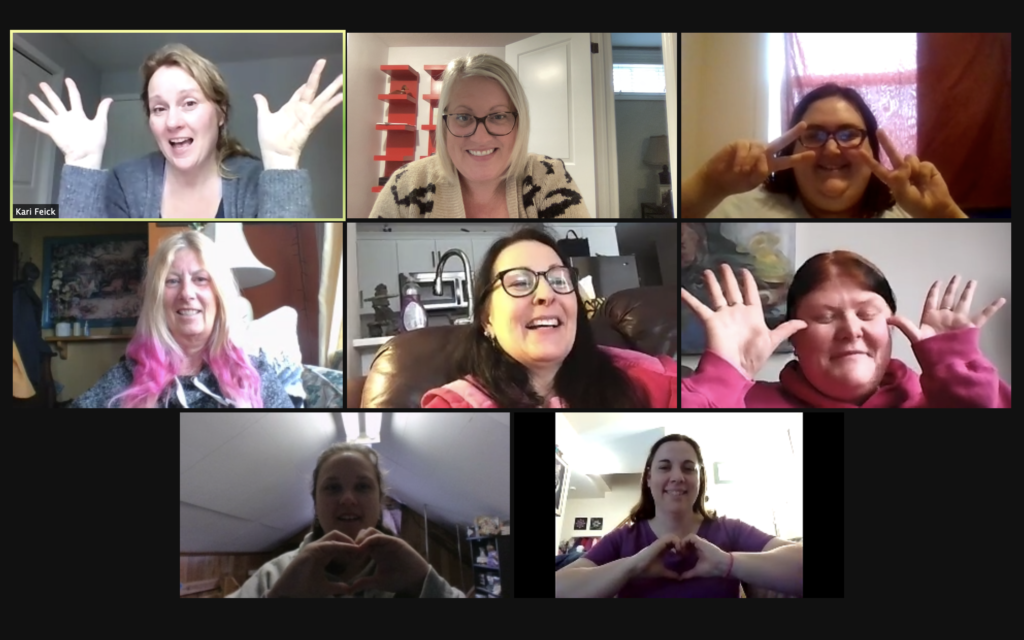
In Motion & Momentum+ (IM&M+) is a pre-employability program developed by the Canadian Career Development Foundation (CCDF). It helps individuals distant from the labour market overcome employment barriers, build foundational critical skills, and strengthen their hope, motivation, and pride—serving as the foundation for working toward their preferred futures.
IM&M+ is composed of three modules: In Motion, Momentum, and Momentum+—delivered over 10 weeks. The program supports job seekers through a person-centred, strengths-based approach combined with active learning and real-world practice. Ultimately, IM&M+ supports individuals with complex needs to move toward sustainable labour market attachment through a career-development approach. This process emphasizes self-discovery, identifying and mobilizing strengths, building foundational skills, supporting goal achievement, and fostering community connections to inspire increased hope and motivation. IM&M+ is meant to complement existing skill-, workforce development, and job acquisition programming and interventions offered across the public employment ecosystem. It addresses employability needs so that individuals are ready and able to benefit from further interventions that support their career goals.
There have been multiple phases of implementation and evaluation.
In 2020, CCDF received a grant from the Future Skills Centre to expand to multiple locations and test the effectiveness of IM&M+ with diverse populations. Blueprint’s evaluation of the expansion found that IM&M+ participants experienced increases in pre-employability skills, employment attainment, and enrollment in education and training.
In 2021, CCDF received a second grant from the Future Skills Centre to work with Blueprint to use a randomized controlled trial (RCT) to measure IM&M+’s causal impact on participant outcomes—pre-employability skills (i.e., employment hope; emotional intelligence; mental health; healthy behaviours; locus of control; resilience; and self-esteem), full- and part-time employment, social assistance receipt, and education enrolment (i.e., training or education program outside of IM&M+).
The questions guiding the evaluation of IM&M+ included:
- Program reach. Is the program reaching its target population?
- Participant experiences. Do participants persist in the program and complete the modules? Are participants satisfied with their experience in the program? According to participants, what are the program’s strengths and areas for improvement?
- Program impact. What are the effects of IM&M+ on pre-employability skills, employment, and education enrolment?
- Program implementation. Is the program delivered with fidelity? What contextual adaptations are needed? What are the successes and challenges with delivery?
The RCT compares two groups: those who enrolled in IM&M+ (herein, the program group) and those who did not (the comparison group). Though the comparison group was unable to enroll in IM&M+, they were referred to other available programming normally offered to clients fitting this profile, including but not limited to literacy training, employability skills training, resume writing, interview skills development, and one-on-one counselling.
To date, the RCT has included multiple IM&M+ cohorts:
- Two cohorts delivered in February 2022 and September 2022
- Three cohorts were delivered in February 2023, September 2023, and April 2024, with each cohort delivered by between seven and 13 community partners across Canada.
- In July 2023, a ‘partial cohort’ was delivered by one community partner, John Howard Society – St. John’s West Coast Correctional Centre.
Findings to date include data from all five full cohorts and this one partial cohort. Findings are based on administrative and survey data (at baseline, midpoint, exit, and three- and 12-month follow-up points), participant interviews, facilitator focus groups and worksheets, and a CCDF focus group. Data was collected by Blueprint, delivery partners, and CCDF from February 2022 to April 2024.
The evaluation included a longitudinal analysis of surveys to assess participant skill level changes from program start to end, comparing them between participants who enrolled (the program group) to those who did not (the comparison group).
 What We’re Learning
Since the launch of the RCT, a total of 82% (636/772) of applicants consented to participate in the research. Findings show IM&M+ is reaching its target demographic, achieving high rates of satisfaction, and generating positive delivery experiences.
IM&M+ continues to reach its target demographic
Individuals with prolonged employment issues (over 80% were unemployed, and many were long-term unemployed). Most employed participants were in precarious, poorly paid work with limited career opportunities. Over 50% had no post-secondary education and over 50% were relying on income assistance.
High satisfaction among participants
Participants continue to show high satisfaction with all three modules, believe the program offered high levels of utility, and indicated they had already recommended IM&M+ or would likely recommend it. In interviews, participants valued the facilitative support, the overall structure, and peer interactions, which helped foster a collaborative environment and positive goal progression. Facilitators were credited for creating a safe, supportive space conducive to personal development.
High fidelity delivery despite recruitment and support challenges
Facilitators reported high fidelity across sites and expressed fulfillment in delivering IM&M+, supported by CCDF’s resources, training, and agency support. Some reported challenges with recruitment, life-stabilization needs among participants, and with transitioning participants post-program. Recruitment difficulties were likely exacerbated by the pandemic. Gaps in local social services added pressure in terms of meeting life-stabilization needs, with some facilitators seeking additional mental health and trauma-informed training.
Positive impacts on pre-employability skills
IM&M+ demonstrates positive impacts on four pre-employability skills, habits, and attitudes—employment hope, emotional intelligence, mental health, and healthy behaviours—that are critical precursors to employment readiness. In fact, results show a degradation of pre-employability skills, habits, and attitudes in the comparison group—a finding that questions whether commonly available services are providing sufficient support for job seekers, especially those most distant from the labour market.
Increases in employment outcomes
Employment rates increased by 34 percentage points for IM&M+ participants and by 22 percentage points for the comparison group. This means IM&M+ participants are 28% more likely to be employed 12 months after program completion than their peers who receive referrals to other available services.
Mixed results on social assistance rates
Program group members were slightly less likely than comparison group members to receive social assistance at 12 months. Blueprint noted that those employed may remain on social assistance for several months after gaining employment, which may account for why more notable and immediate change is not found. While the difference in social receipt between program and comparison groups was not large enough to be attributable to IM&M+ at this time, increased employment rates in the program group may translate into larger effects on social assistance over a longer period.
 Why It Matters
Investing in and rigorously testing pre-employability programs like IM&M+ is essential for a more inclusive, effective, and evidence-driven employment system.
There is an urgent need for policies that support robust pre-employability programming across Canada. As noted above, too often, job seekers are referred into training or job placements without addressing foundational needs—such as emotional well-being, confidence, goal-setting, and essential life skills—leading to a recurring ‘spin cycle’ within public employment services. IM&M+’s success in reaching and positively impacting individuals with complex barriers to employment demonstrates how person-centred, strengths-based interventions can interrupt that cycle and lay the groundwork for meaningful, sustained labour market attachment.
From a workforce development and economic standpoint, pre-employability programming is an essential but under-invested element of the employment ecosystem. In an era of tight labour markets, shifting skill demands, and an aging population, Canada cannot afford to leave behind individuals who are underrepresented in the workforce simply because they are not yet “job-ready” by conventional definitions. IM&M+ helps expand the talent pipeline by building psychological and practical readiness, and its modular, flexible delivery model provides a blueprint for how services can meet people where they are.

State of Skills:
Digital Tools in the Skills Ecosystem
There is considerable promise in the role digital tools and virtual career services can play in improving access to training and career development, particularly for those with geographic barriers or constraints such as family care or other work responsibilities.
This pre-employability intervention is being rigorously tested using a RCT —a high standard for determining causal impact. This methodological strength allows us to say, with confidence, that observed outcomes (increased employment hope, emotional intelligence, mental health, and employment rates) are attributable to IM&M+ rather than external factors. This is an important way to advance our collective understanding of what works, for whom, and under what conditions. The evaluation also sets an example for future investments in pre-employability programming—showing that these supports can be held to the same standard of evidence as other workforce interventions.
 What’s Next
A final report from Blueprint on the results of the RCT will include:
- Results from the full sample, including updated participant and outcomes data from the final September 2024 cohort and from Statistics Canada data linkage.
- Additional insights into how the program’s impact differs among specific demographic groups, such as newcomers, individuals with disabilities, youth, and individuals who are not in employment, education, or training (NEET) for at least six months.
- An assessment of whether (and how) module completion impacts outcomes (i.e., whether there are correlations between the number of modules completed and program outcomes).
- A cost-effectiveness analysis that estimates the cost of delivering IM&M+ (per cohort and person) relative to its overall impact on or benefits to participants.
- Further implementation research to better understand considerations for scaling IM&M+ to new population groups and provinces.
In addition to the results of the RCT, in 2026, the Future Skills Centre is supporting CCDF to create a replication toolkit and strategy, and work with the BC Government, the Department of Workforce, Advanced Learning and Population in PEI & the Corporation of the City of Windsor to implement the IM&M+ program. This latest phase will further test the feasibility of replication and the extent to which similar outcomes for participants were achieved in new locations. The goals of this replication are to:
- Secure the long-term sustainability through replication, creating revenue-generating models and/or proof of results at scale for broad integration in government services.
- Increase capacity for all participating organizations to champion, implement with fidelity, and adapt evidence-based interventions to local contexts.
- Accelerate the diffusion and adoption of successful, evidence-based interventions across the field, leading to broader uptake and improved service delivery.
Have questions about our work? Do you need access to a report in English or French? Please contact communications@fsc-ccf.ca.
More from FSC

Effective Employer Engagement in Skills Development: From Rhetoric to Solutions

Work Reimagined: Roles, Skills, and Workforce Development in the Age of AI

Winnipeg Newcomer Employment Hub
How to Cite This Report
Blueprint. (2026). Project Insights Report: In Motion & Momentum+ (IM&M+) – Building Resilience, Hope and Sustainable Futures, Canadian Career Development Foundation. Toronto: Future Skills Centre. https://fsc-ccf.ca/projects/imandm/

In Motion & Momentum+ (IM&M+) is funded by the Government of Canada’s Future Skills Program. The opinions and interpretations in this publication are those of the author and do not necessarily reflect those of the Government of Canada.