A Future Built on Skills: Why AI Literacy Must Become a Nation-Building Project
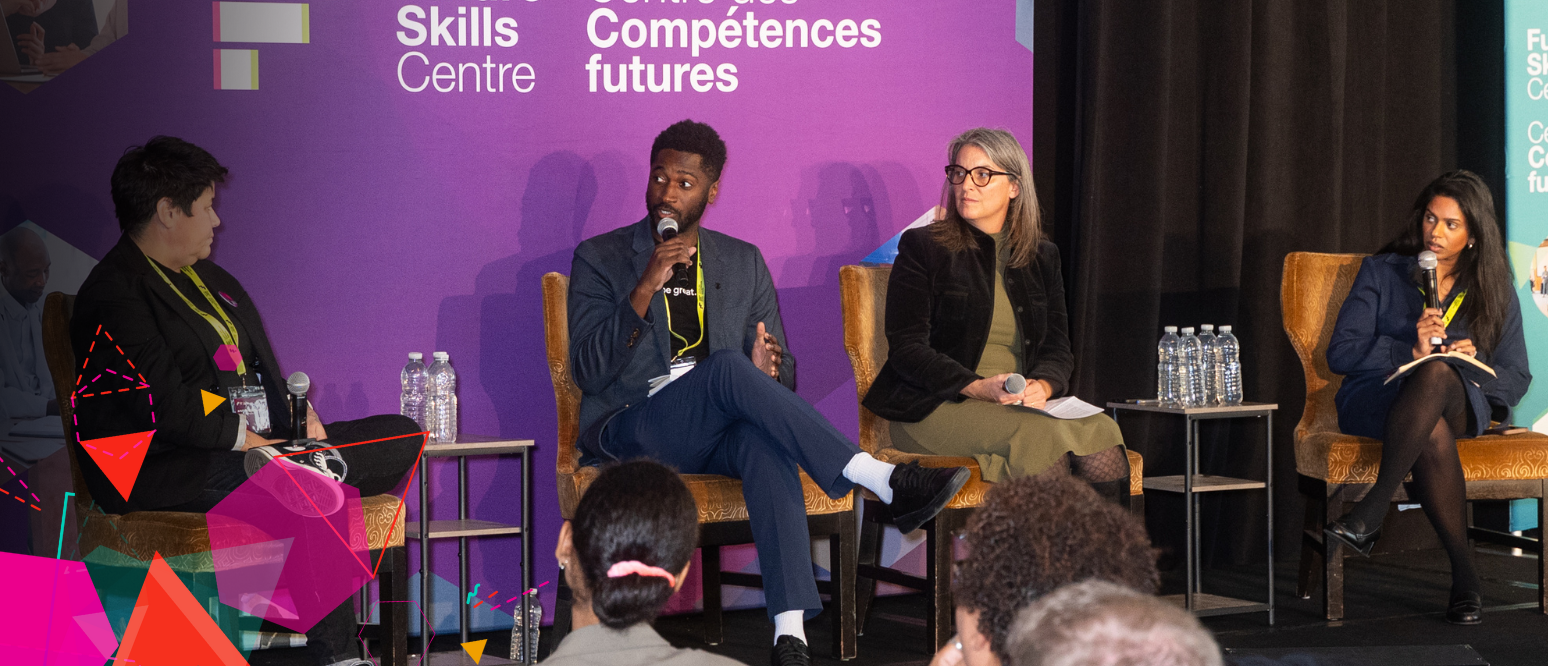
When I accepted the Emerging Leader Award at the Public Policy Forum Awards, I brought the room together with “two claps.” It was a small reminder of how quickly people can find rhythm and unity when invited to. That sense of shared purpose is exactly why I was glad to speak at A Future Built on Skills. Canada is entering a moment that requires us to move together, deliberately and confidently, toward a future shaped by new technologies and new ways of learning.
Accelerate problem-solving
At Tribe Network, we work with Black and racialized entrepreneurs across Canada, helping them access mentorship, coaching, and capital. One founder in particular, Collins, reshaped how we think about what young people can achieve. After arriving from Nigeria to study computer science at Memorial University, he struggled to adapt to a new environment and new expectations. Instead of giving up, he built a personalized AI tutor to help himself learn. That tool became ScanSolve, now used by more than five million people worldwide. He built it when he was twenty.
His story made us ask a simple question: if one student, working alone, could build something with global impact, what might happen if more young people had the skills and support to do the same? With that in mind, and with support from organizations like the Rideau Hall Foundation and the Foundation for Black Communities, we launched the AI Youth Fellowship. Our approach is hands-on: students learn about ethics, privacy, and responsible use, but they also build a real solution to a real problem. Our first cohort included fifty university students, and we are expanding to high school youth this fall.
Future-proofing requires adoption at scale
Artificial intelligence is not confined to a single sector. It is reshaping healthcare, education, government, business, and everyday life. If Canada wants to compete globally, AI literacy must become a national priority. Other countries have already made decisive moves. China, for example, introduced mandatory K–12 AI literacy this year. We need a similarly bold approach. One practical step would be a universal skills credit that allows workers and students to pursue new training and micro-credentials. When people understand how to use emerging tools, risks shrink and opportunities grow.
At Tribe Network, our experience hiring reflects how quickly expectations are shifting. Of all of our staff members, only five came through traditional job postings. The rest approached us with demonstrations of real value, case studies, prototypes, and projects that showed what they could contribute immediately. A résumé still matters, but it is no longer the clearest way to stand out. I encourage young people and newcomers to show employers what they can build and the problems they can solve today, not just the credentials they hold.
Embracing social connections for personal and professional growth
A generation of young people are craving for what is called a “third space” a social environment separate from home and work. We are also seeing young people move away from social media and toward in-person experiences, such as run clubs, community gatherings, and informal networking spaces. Years ago, I was part of the Halifax Social Network, which hosted casual events where people simply shared their stories and connected with local leaders. Those environments created real social capital, and I believe we need more of them now. Relationships, mentorship, and trust still grow best face-to-face.
Finally, while Canada offers a wide range of government supports for entrepreneurs, these programs don’t always reach founders who look like me. Too often, the missing link isn’t funding or information—it’s access to relationships. Many founders lack connections to mentors who are hard to reach or who truly understand their lived experience or industry context. At Tribe, we work to close that gap by intentionally building a culture of peer mentorship, both within our organization and through our programs. Every employee is paired with a mentor, and when needed, we look outside the organization to make those matches. This approach helps reduce internal bias and expands access to guidance that people might not otherwise receive. It’s a model more organizations should consider adopting.
Canada’s future depends on our ability to help people learn new skills, adapt confidently, and build solutions that matter. AI literacy, mentorship, and strong in-person networks are not optional — they are foundational. If we move together with intention, we can build a country where young people are not simply prepared for the future but leading it.
Two claps for that.
These remarks were shared at A Future Built on Skills, a national forum convened by the Future Skills Centre. Watch the full talk, Future Skills in Demand →
The views, thoughts and opinions expressed here are the author’s own and do not necessarily reflect the viewpoint, official policy or position of the Future Skills Centre or any of its staff members or consortium partners.
Related Blog Posts
Building a Stronger Evidence Base for Skills: Using Linked Data to Measure Long-Term Outcomes
Why Replication Matters: Expanding What Works Across Canada