

Project Insights Report
Building Resiliency and Sustainability for the Bio-Economy to Withstand Disruption
 Partners
 Locations
Across Canada
 Investment
$1,035,000
 Published
May 2026
 Contributors
Steve Richter and Laura McDonough

 Executive Summary
Led by BioTalent Canada, the two phases of this project tackled pressing issues faced by the Canadian bio-economy amid the COVID-19 pandemic and the development of a National Skills Standard for Cleanroom Readiness. The biomanufacturing sector mostly encompasses small and medium-sized enterprises (SMEs). The first phase of the project highlighted how enhanced HR functions are critical in helping SMEs thrive despite adversities. The findings emphasized that inclusion, diversity, equity, and accessibility are essential in shielding businesses against disruptions.
To assist with the development of better HR policies, the project produced the I.D.E.A.L Bioscience Employer™ Recognition program and ‘Building Workplace Resiliency Resources’ initiative. These tools assisted organizations in adopting and practicing inclusive, equitable, and accessible corporate principles, thereby boosting resilience and sustainability.
Phase 2 of the project built a practical assessment framework that addressed the main cleanroom behaviours needed to show proficiency in a cleanroom environment, supporting biomanufacturing SMEs to address hiring challenges and talent gaps.
The two phases of this project established BioTalent Canada as a leader in promoting resilience through strategic HR management within the bio-economy, offering a replicable model for other sectors seeking sustainability and resilience in the face of global challenges.
Key Insights
 The implementation of EDI policies and crisis management in Canadian bio-technology SMEs proved to be essential in the face of disruption; like the COVID-19 pandemic.
 More than 300 employers were engaged through both phases of the project.
 Most biomanufacturing experts consulted knew about virtual reality, but they hadn’t considered creating virtual cleanrooms for training purposes.
 The Issue
The Canadian bio-economy was profoundly impacted by the COVID-19 pandemic. This sector, largely made up of SMEs, faced numerous challenges such as workplace restrictions and persistent talent shortages. That said, some of these SMEs actually prospered during the pandemic.
Prior labour market intelligence research conducted by BioTalent Canada had already identified a crucial lack of accessible tools and resources that could help employers create modern, diverse, and inclusive workplaces – a key to building organizational resilience. The findings revealed that while larger companies in the bio-economy might have internal resources to manage these challenges, the majority, particularly SMEs which make up 83% of the sector and often earn less than $1 million annually, did not have dedicated HR departments to navigate these HR challenges during and after pandemic disruptions.
With this in mind, BioTalent Canada wanted to produce a toolkit for SMEs in the biotechnology sector so that they could learn from those that grew during disruption, thus future-proofing their operations. Key to this was the ability to recruit, onboard and retain diverse talent through frameworks that promote equity, diversity and inclusion; something that many SMEs lack the resources to properly implement.
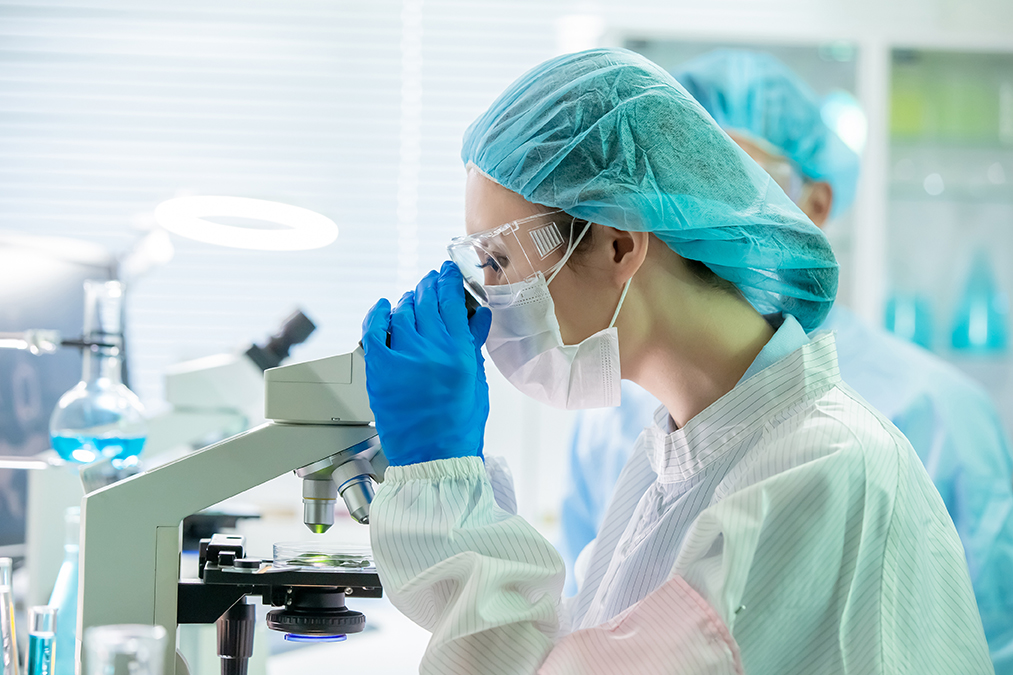
In addition to the needs of SMEs in the biomanufacturing sector, industry feedback since the pandemic has highlighted a significant gap in skilled talent for sterile cleanrooms – essential in biomanufacturing to ensure the safety and quality of pharmaceuticals, biologics, and medical devices by preventing contamination.
Few high school, college or university bioscience programs offer students hands-on exposure to or training in a cleanroom. While graduates of these programs may have the theoretical knowledge for working in a cleanroom, many do not have the practical experience. In addition, certification demonstrating the ability to work in a cleanroom does not exist. As such, employers have no way to assess whether jobseekers have the necessary cleanroom skills prior to hiring them.
 What We Investigated
To address these gaps, during Phase 1 (2021-2023) the project developed a suite of tools and resources aimed to improve HR practices in onboarding, retention, and recruitment, specifically tailored to the unique challenges faced by SMEs in the bio-economy. The project sought to build a foundation of resilience capable of withstanding future disruptions.
To further supplement their understanding of the needs of SMEs in the bio-economy sector, BioTalent explored the following research questions:
- How have certain operational models succeeded?
- In what ways have diversity and inclusion played roles in bolstering organizations against disruptions?
- What specific support do small and medium-sized employers in this sector need to enhance their resilience?
The project started with data collection to better understand promising HR practices across sectors as well as pertinent academic and policy literature. To properly situate these findings against the actual HR structures of the SMEs in the bio-economy, BioTalent conducted a survey of 344 employers, semi-structured qualitative interviews with 33 sector representatives, and focus groups with 18 employers. This resulted in the creation of 4 case studies, highlighting successful, innovative approaches to dealing with disruption.
Following this initial research, the project blended quantitative data from the surveys with qualitative insights from interviews and case studies to create practical tools aimed at improving onboarding, retention, and recruitment practices that support organizational resilience. This deployment aligned with the principles of inclusion, diversity, equity, and accessibility (IDEAL).
Phase 2 – 2024
Building on the success of the previous phase and industry feedback about the lack of skilled talent for sterile cleanrooms, the second phase of this project aimed to:
- Build a practical assessment framework that addresses the main cleanroom behaviours needed to show proficiency in a cleanroom environment and validate it by collecting feedback via focus groups, interviews and surveys with over 30 industry employers and experts.
- Develop an asset map that includes a detailed assessment of equipment and materials required for cleanroom training and identify which can be replicated in a digital cleanroom.
- Generate support for building a virtual reality (VR) digital cleanroom.
- Develop a marketing campaign to promote the development of a practical assessment for certification in a biomanufacturing cleanroom, and BioTalent Canada’s National Skills Standard for Cleanroom Readiness.
This approach aimed to create standardized training and assessment tools to improve workforce adaptability and address hiring challenges in these highly regulated environments, including validating workers’ capabilities, benefiting not only domestic talent but also skilled newcomers to Canada by providing a pathway to demonstrate their expertise without prior Canadian experience.
 What We’re Learning
Phase 1 of the project from 2021-2023 engaged 344 employers through a survey and conducted 33 semi-structured interviews, resulting in the development of 6 research reports and 4 thematic case studies.
Key learnings from Phase 1 included:
- Understanding needs to guide tool development. The data collected during this project laid a robust foundation for developing tailored tools that materially improved employer capabilities, including resources on hiring internationally educated professionals, understanding Canadian human rights, and developing organizational culture. A crucial element to extracting the most out of the data was integrating research findings with real-world industry insights. This allowed the team to validate the actual challenges faced by participant organizations.
- Engagement leads to action. Active engagement and collaboration with industry partners and employers proved to be essential in translating research into actionable strategies and tools. This interaction not only facilitated immediate resource development but also laid the groundwork for future initiatives, such as a potential certification program for specific skills development in the bio-manufacturing sector, highlighting the project’s lasting influence and relevance in bolstering the Canadian bio-economy.
Phase 2 (2024) of the project engaged over 30 industry experts and employers.
- The evaluation found high levels of satisfaction with the development of a practical assessment framework. Employers and industry representatives agreed that the development of a practical assessment framework will help provide standardization and consistency for assessing proficiency in biomanufacturing cleanroom skills, ensuring that the sector’s workforce have the required skills for cleanroom environments. Five out of seven employers indicated they were very likely or somewhat likely to invest in a practical assessment framework for certification in a biomanufacturing cleanroom.
- VR can help streamline cleanroom training, but hands-on assessment remains essential. Employers highlighted the need for a consistent, officially recognized virtual reality training certificate to quickly hire people with the right skills and make the workforce more flexible. Experts agreed that using VR to create virtual copies of real environments (digital twins) could greatly help train people who work in sterile cleanrooms. This technology is excellent for basic introductions and practicing skills over and over again, making training cheaper and easier to access for everyone. However, they emphasized that because cleanroom work demands high accuracy and strict rules, VR should only be used for certain skills, and the most critical hands-on tasks must still be tested in a real-world setting. Surprisingly, while many biomanufacturing experts were familiar with VR, most hadn’t thought about using it to create virtual cleanrooms until this project, which is now investigating how physical training equipment can be recreated digitally.
 Why It Matters
The emphasis on inclusion, diversity, equity, and accessibility leadership along with the strategic development of HR functions even in resource-strapped settings provides a viable model that can be replicated to enhance organizational resilience across different sectors. These practices can guide policies aimed at boosting SME resilience, which is crucial for economic stability and growth. Phase 1 of this project not only enhanced the resilience capabilities of the Canadian bio-economy against disruptions but also laid the groundwork for similar future initiatives across different sectors, prioritizing evidence-based practices, stakeholder engagements, and inclusivity as cornerstones for industry-wide resilience and sustainability.
Building HR capacity across SMEs
By documenting the resilience factors during the COVID-19 disruptions and developing the Skills Standard for Cleanroom Readiness, this project enhances industry-wide resilience in the biomanufacturing sector. As many of the small to medium-sized organizations in this sector do not have dedicated HR departments, the deployment of tools and resources – particularly those promoting diversity, equity and inclusion, and providing practical assessment standards – are a template that can be replicated to aid these businesses in achieving efficient operational and resilience standards. This project can be added to others focused on alleviating long-standing barriers faced by SMEs. Policy makers should consider additional capacity-building support for SMEs, whilst keeping in mind the essential role played by HR departments in crisis management and recovery.
Continuous evaluation as central to success
The continuous use of evidence to initiate, modify and amplify tools underscores the importance of data in creating adaptable and effective industry supports. The project succeeded in showcasing the strengths of quantitative surveys and qualitative interviews, allowing for a more holistic understanding of sectoral needs. Future projects seeking similar results should incorporate various methods of gathering and analyzing data to ensure the needs and opportunities of their target population are well understood and integrated into action plans.

State of Skills:
Unleashing AI into the skills development ecosystem
To reap the benefits that AI has to offer, its adoption and deployment should be a collaborative and inclusive process that recognizes and addresses genuine concerns individuals have about AI and technology more broadly.
Breaking out of silos
This project’s ability to engage a large number of organizations was the lynchpin to its success. The robust network of SMEs, ready and willing to participate, allowed BioTalent to work quickly, yet efficiently, in developing and distributing their industry-relevant materials. Other projects that seek similar sectoral-wide impact should consider the value in creating such a wide network or partnering with organizations that do. Policymakers and funders are encouraged to continue supporting projects that foster sustained collaboration with industry. Funding mechanisms that emphasize ongoing partnerships help ensure outcomes are practical and meet the needs of the field.
 What’s Next
BioTalent Canada continues to make a significant impact on organizational resilience through the annual BioTalent Canada’s I.D.E.A.L. Bioscience Employer Recognition Program. BioTalent Canada is expanding the program to include an I.D.E.A.L. Scholarship, designed to promote inclusion, diversity, equity, and accessibility leadership in science, technology, engineering, and mathematics studies. The scholarship will encourage equity-deserving groups to enter STEM studies, diversify the bio-economy, and increase enrollment in STEM programs across Canada. The inaugural launch of this scholarship will specifically focus on attracting talent from Indigenous persons and people living with disabilities, based on the findings of BioTalent Canada’s Labour Market Information which highlighted these two groups as the least represented in the industry.
In the future, BioTalent Canada envisions using VR digital twin technology to overcome training space limitations and enhance cleanroom skill development, creating a strong pipeline of qualified talent for the bio-economy. BioTalent Canada continues to use the National Skills Standard for Cleanroom Readiness to provide support to the biomanufacturing sector in Canada.
FSC Insights
Evaluation of BioTalent Canada’s Practical Assessment for Certification in a Biomanufacturing cleanroom with Asset Map Project
National Skills Standard for Cleanroom Readiness
Building Resiliency and Sustainability for the Bio-economy to Withstand Disruption
Have questions about our work? Do you need access to a report in English or French? Please contact communications@fsc-ccf.ca.
More from FSC

Newcomer Entrepreneurship Program
Accelerating the Appropriate Adoption of Artificial Intelligence in Healthcare

Competitiveness of Critical Mining in the North
How to Cite This Report
Richter, S. & McDonough, L. (2025). Project Insights Report: Building Resiliency and Sustainability for the Bio-economy to Withstand Disruption, BioTalent Canada. Toronto: Future Skills Centre. https://fsc-ccf.ca/projects/biotalent/

Building Resiliency and Sustainability for the Bio-Economy to Withstand Disruption is funded by the Government of Canada’s Future Skills Program. The opinions and interpretations in this publication are those of the author and do not necessarily reflect those of the Government of Canada.