

Project Insights Report
Building British Columbia’s Mining Workforce
 Partners
 Locations
British Columbia
 Investment
$256,000
 Published
June 2026
 Contributors
Report author: Gabrielle Dark
Reviewers/approvers: Anita Dubey, Laura McDonough

Mining Skills Innovation Research Project
 Executive Summary
British Columbia’s mining industry generates $18 billion annually, accounting for 28% of the province’s goods exports. However, the sector’s growth is threatened by a workforce that has declined since the 2010s due to retirements and limited training capacity. Currently, it represents just 1% of British Columbia’s (B.C.) total workforce, leaving the industry vulnerable to sudden shifts in demand.
Research and econometric forecasting for 2024–2035 reveal a massive hiring requirement: 35,000 new workers are needed over the next decade to meet baseline demand and replace retirees. B.C.’s internal labour market currently meets only 72% of this need. Significant gaps exist in critical occupations, such as heavy equipment operators, and in technical competencies such as operation and control.
Regional assessments in the Cariboo and Northcoast/Nechako regions have identified logistical barriers to training, including housing shortages, childcare gaps, and geographic isolation. To address these issues, the research proposes a Workforce Development Accelerator Framework. This model aims to bridge the gap between training delivery and industry demand by leveraging the existing ecosystem with targeted, cost-effective interventions.
The responsibility for implementation lies with both industry leaders and the provincial government. Evidence-based training for critical occupations should be immediately prioritized. The long-term strategy should focus on integrating the B.C. Mining Training Accelerator into the provincial Critical Minerals Strategy to ensure B.C. remains competitive in a low-carbon economy.
Key Insights
 The B.C. mining industry is projected to need 35,000 new workers over the next decade to account for net employment increases and the replacement of retirees.
 Stakeholders expressed a strong desire to shift toward community-based delivery models, which incorporate mentorship and culturally grounded approaches.
 A well-designed Mining Training Accelerator could leverage the current training ecosystem and supplement it with targeted, cost-effective interventions.
 The Issue
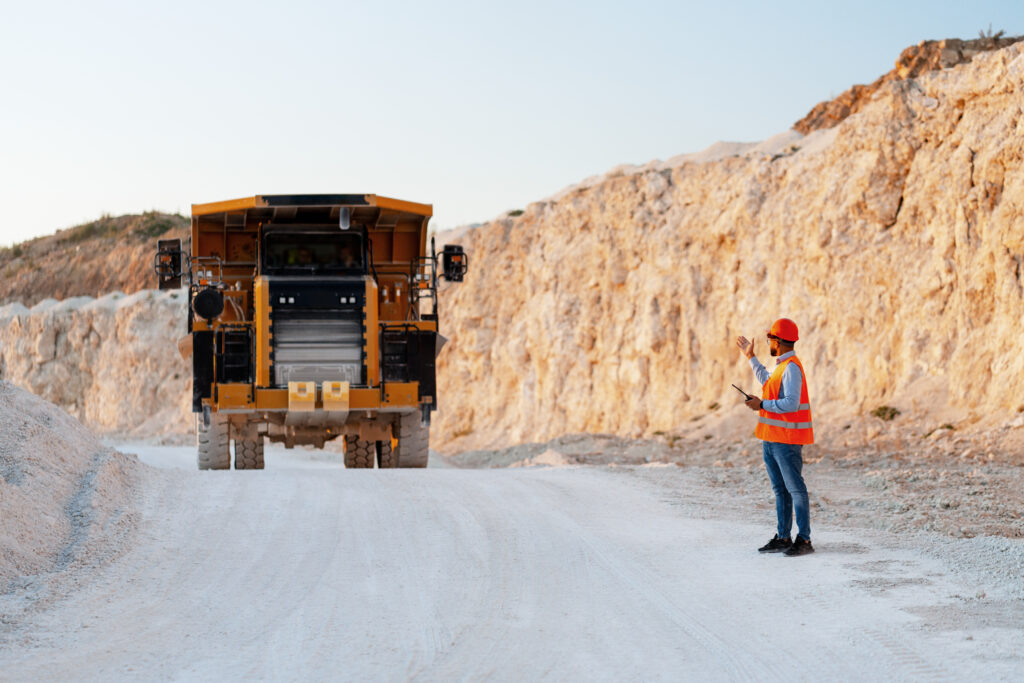
British Columbia’s mining industry is a key driver of the provincial economy, generating $18 billion in annual activity and accounting for 28% of all goods exports. With 18 operating mines, two world-class smelters, and multiple new mines or expansions currently in development, the sector’s growth is a provincial priority.
However, this growth will place pressure on the industry and its workforce, which has declined in numbers since the 2010s due to retirements, limited training capacities, and competition from other sectors. Now, with approximately 30,000 workers, the mining industry represents just 1% of the province’s total workforce. This leaves it vulnerable to sudden shifts in demand, which are required by a project-driven industry.
Current training structures and policy frameworks are struggling to remain agile enough to meet the growing demands across 120 diverse occupations.
 What We Investigated
This project sought to increase the AI knowledge and skills of proThis research aims to better understand the supply and demand of B.C.’s mining labour market, while identifying existing barriers to training delivery. By exploring practical, industry-aligned solutions, this project seeks to ensure that British Columbia has a reliable supply of skilled workers to safely and effectively deliver on the province’s Critical Minerals Strategy.
Three core research questions drove this project:
- What are the critical occupational and skills/competencies gaps resulting from accelerated development of critical minerals and precious metals mines over the next 10 years?
- What are the limitations and capacity constraints for addressing the gaps (e.g., not enough training, barriers to training and job development, regional infrastructure)?
- How can leading frameworks for successful, new skills training practices and technologies fill the known and emerging skills needs in a way that is flexible, agile and accelerated to meet current and future industry needs?
To answer these research questions the project:
- Developed a 10-year forecast (2024-2035) on current and future net changes for the mining labour force.
- Conducted a sector skills and competency needs benchmarking study, building on the 2023 CTEM Skills Roadmap Project findings to identify the bottlenecks that are preventing workforce scaling. It includes a province-wide survey and 10 targeted key informant interviews in the Cariboo and Northcoast/Nechako regions.
- Development of a workforce development accelerator framework to bridge the gap between training delivery and industry demand.
 What We’re Learning
Projected growth in the B.C. mining industry will intensify labour demand and skills beyond current capacity
Econometric forecasting for 2024–2035 revealed that B.C.’s mining sector will see substantial increases in labour demand. A baseline growth scenario requires hiring 35,000 new workers over the next decade to account for net employment increases and the replacement of retirees. A project-based analysis of 49 active and exploration sites validates this demand, predicting a sharp employment surge between 2029 and 2032. This growth is not matched on the supply side: B.C.’s internal labour market currently meets only 72% of the industry’s needs, forcing a heavy reliance on out-of-province recruitment to fill the remaining 28% of roles. This vulnerability will intensify with industry expansion.
There is a need to align training with specific in-demand competencies and skills
The largest skills gaps exist in operation and control and quality control testing, alongside cognitive abilities such as depth perception and spatial visualization. Many of these skills overlap with other industrial sectors, which creates a unique opportunity for labour transferability. However, the industry’s success depends on its ability to compete for these workers against other sectors.
Community-based training delivery could address multiple challenges
To assess the training structure of B.C.’s mining industry, a survey was distributed to nearly 100 industry stakeholders in fall 2025, yielding 37 responses from employers, trainers, and partner organizations. Although the survey findings are useful, it is important to note the limited representativeness of community leaders. The results show that workforce demand remains highest for entry-level mine operators and labourers, as well as heavy equipment operators, underground mining and drilling roles, mill processing, mineral processing, and positions related to environmental monitoring and safety. Additionally, the survey revealed that supervisory, leadership, and management capabilities are one of the most critical gaps, largely due to the lack of retention and succession planning for mid-career workers.
Training barriers are often logistical
The scalability of training is currently limited by a lack of modern equipment and qualified trainers. In rural and remote communities, the primary barriers also include financial constraints, geographic isolation, and limited transportation options. Stakeholders expressed a strong desire for the industry to shift toward community-based delivery models. These models, which incorporate mentorship and culturally grounded approaches, are viewed as essential to improve initial participation and long-term workforce retention.
Challenges and opportunities vary by region
In B.C.’s Cariboo region, housing shortages and income disruption during training were reported as significant barriers. However, there is high potential to develop “forestry-to-mining” transition pathways and regional training hubs that leverage shared post-secondary infrastructure. In the Northcoast and Nechako regions, funding instability and a lack of childcare were identified as significant barriers, particularly for women. These regions are looking toward onsite training models, community-based delivery formats, and mentorship opportunities. By addressing these localized challenges, B.C. can better align its training capacity with the needs of different mining communities.
Developing a skills accelerator framework to meet a mining regional need
A well-designed Mining Training Accelerator could transform B.C.’s existing assets into a sustainable training structure by supplementing the current training ecosystem with targeted, cost-effective interventions. This framework integrates enterprise-level training with transformational workforce planning, prioritizing lifelong learning and adaptive skill development to create accessible pathways for middle-skill careers. It would enable the mining industry to address immediate labour shortages while building long-term resiliency, ensuring the province is prepared for the growth of the mining industry.
 Why It Matters
Canada is intent on developing its capacity to extract critical minerals, with large investments in mining projects and the infrastructure required to access mines and move workers and products. In addition to financial investment, a new Workforce Alliance focused on mining, bringing together employers, unions, industry groups, post-secondary institutions and Indigenous partners to address many of the workforce challenges highlighted in this project.
British Columbia’s mining industry cannot reach its full economic potential without labour supply intervention and improved training models. This project augments B.C.’s Critical Minerals Strategy by showing what is needed to execute the strategy, in terms of skilled labour supply and measures to recruit and retain workers. The project also provides a practical roadmap for maintaining B.C.’s competitive advantage in a low-carbon economy.
Beyond the mining industry, this research answers fundamental questions about how the B.C.’s broader labour market can adapt to a changing economy. It shows how improved labour market information can be used to guide career transitions, ensuring new entrants are equipped with the high-demand skills B.C. (and Canadian) employers need to remain competitive. Most significantly, the research provides essential guidance on how decarbonization pathways in Canada will shift the supply-demand balance for skilled trades.

State of Skills:
Innovation in Training, Recruitment and Upskilling for Skilled Trades
Canada needs to address long standing shortages of skilled tradespeople to advance policy priorities around decarbonization, affordable housing and transforming industry to add more value to what we produce.
More from FSC

Municipal Equity, Diversity, Inclusion, and Reconciliation Sharing Platform

Linking Skills to Employment in Inuit Nunangat
Fisheries for Economic and Environmental Development in the North (FEED the North)
Have questions about our work? Do you need access to a report in English or French? Please contact communications@fsc-ccf.ca.
How to Cite This Report
Dark, G. (2026). Project Insights Report: Mining Skills Innovation Research Project, Mining Association of British Columbia. Toronto: Future Skills Centre. https://fsc-ccf.ca/research/mining-skills-innovation/

Building British Columbia’s Mining Workforce is funded by the Government of Canada’s Future Skills Program. The opinions and interpretations in this publication are those of the author and do not necessarily reflect those of the Government of Canada.