Moving from Evidence to Action: Mobilizing Canada’s Workforce for Our Shared Prosperity
TORONTO — Canada has ambitious economic goals, from major investments in housing and infrastructure to advances in technology and clean energy. Delivering on those ambitions will depend on having the people and skills needed to make them happen.
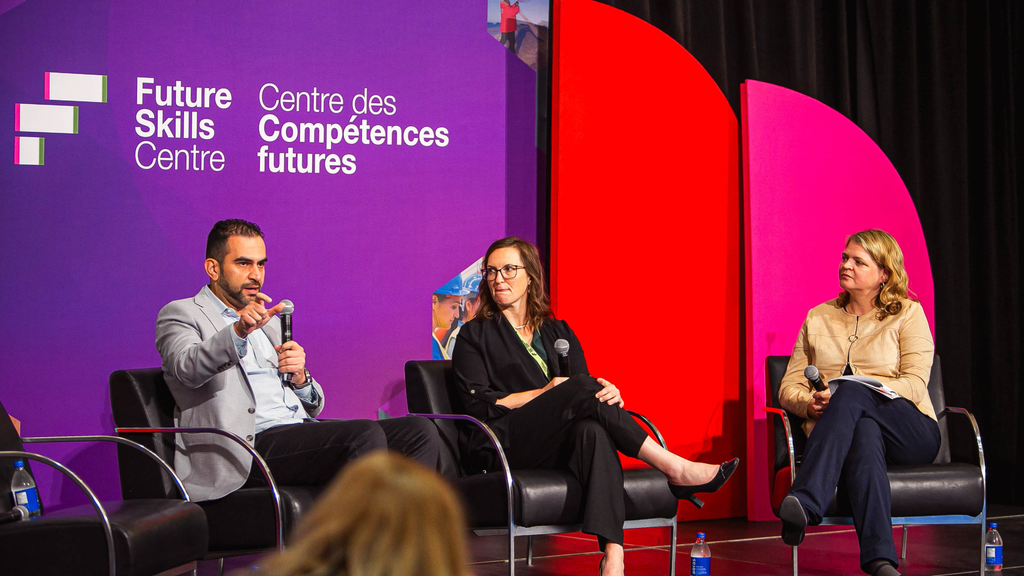
That was the central message at A Future Built on Skills: Meeting the Demand for Talent, a national forum hosted by the Future Skills Centre. Over two days of high-impact discussions and workshops, we brought together decision-makers from policy, industry, labour and workforce development to bridge the conversation and explore how we can connect talent directly to Canada’s emerging opportunities.
Four Pillars to Shift the System
Throughout the forum, conversations returned to four key shifts needed to help Canada meet its workforce demands and remain competitive.
Award-winning Canadian news executive Hannah Thibedeau was our special guest on day one, leading a panel on empowering the next generation of workers. She emphasized that unlocking Canada’s potential starts with clearing accessible pathways for youth, ensuring early-career talent can seamlessly transition into high-demand industries.
Conversations highlighted the importance of giving young people earlier and more direct exposure to skilled trades careers. Speakers challenged the idea that people need to complete extensive training before they can gain experience on the job, arguing that employers can play a greater role in helping new workers learn while contributing to real projects.
Employers also need the capacity to recruit, train and retain new workers, particularly in smaller businesses. As Paul Thompson, the Deputy Minister from Employment and Social Development Canada (ESDC), noted, employers have an important role to play in helping people take that first step into the workforce.
“Getting into the door is absolutely critical, and it’s important for employers to be leaning in to provide that first opportunity, which is then a ticket to growth.”

During the “Workforce intelligence: What the latest numbers signal for Canada”, economists and sector leaders examined Canada’s complex economic backdrop, noting that widespread demographic shifts, such as surging retirements, are creating persistent labour mismatches. Speakers also explored how automation and artificial intelligence are reshaping jobs, working conditions and the skills workers need to succeed. Discussions highlighted the importance of agile reskilling and adaptable human capabilities like problem-solving, critical thinking and collaboration as technology continues to change the world of work.
Second, a skills-first approach means looking beyond traditional degrees and credentials to recognize what people can actually do. International perspectives from Australia and the United States highlighted how tools such as national skills frameworks and digital employment records can help make skills more visible, transferable and relevant to employers. Recognizing competencies alongside credentials can also open doors for people whose experience and abilities may not be reflected in a traditional résumé.

Third, regional economic development and workforce training need to move in step. Speakers highlighted the role of local workforce intermediaries in connecting employers, training providers and communities. By helping small and medium-sized businesses identify shared hiring needs and giving post-secondary institutions clearer signals about emerging skill requirements, these partnerships can make training more responsive to local labour market realities.
Real-world models showcased how targeted sector partnerships drive results on the ground. Audrey Murray, Executive Director at Commission de la construction du Québec showed how Quebec’s co-designed training pathways are closing construction labour gaps, and Penny Walsh, CEO of Canadian Alliance for Skills and Training in the Life Sciences (CASTL) broke down industry-aligned competency models powering Canada’s fast-growing bio-economy.
Fourth, meeting Canada’s talent needs means making sure more people can participate and thrive in the workforce. Speakers emphasized that inclusive hiring must go hand in hand with workplace cultures that support retention, advancement and belonging. This means creating meaningful opportunities for women, Indigenous Peoples, newcomers, people with disabilities and other equity-deserving groups.
Anjana Moitra-Ohri, Vice President, Head of Human Resources at Roots Canada, pointed out that true retention requires fostering psychological safety and real influence within the workplace.
“Inclusion works best when you’re building that core competency within the fabric of the organization—not as its own standalone stream, but in the course of doing business and in your way of working,” she said.
Addressing workforce shortages is not just about finding more workers. It is about recognizing existing talent, removing barriers to participation and creating workplaces where people can contribute and grow.

Getting diverse talent through the front door isn’t enough if workplace culture drives them out. HR leaders and researchers emphasized that real inclusion requires clear internal promotion paths, psychological safety and leadership accountability to ensure retention matches recruitment.
Across all four areas, leaders recognized that technical skills alone will not be enough to meet Canada’s future workforce needs. Human capabilities such as judgment, critical thinking, adaptability and collaboration will remain essential as jobs and industries continue to evolve.
Watch the full event playlist: