Walking the Talk: Reflections on Relationship-Building in Indigenous Workforce Development

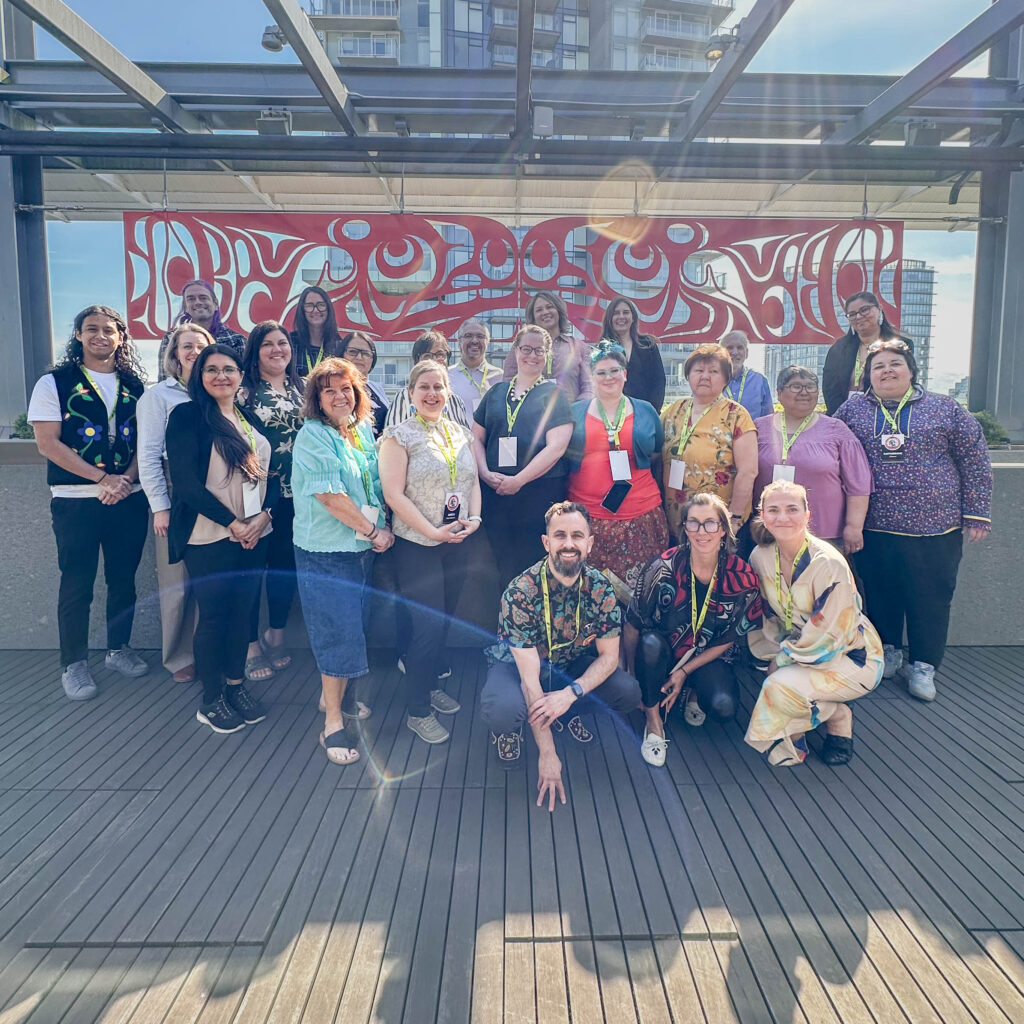
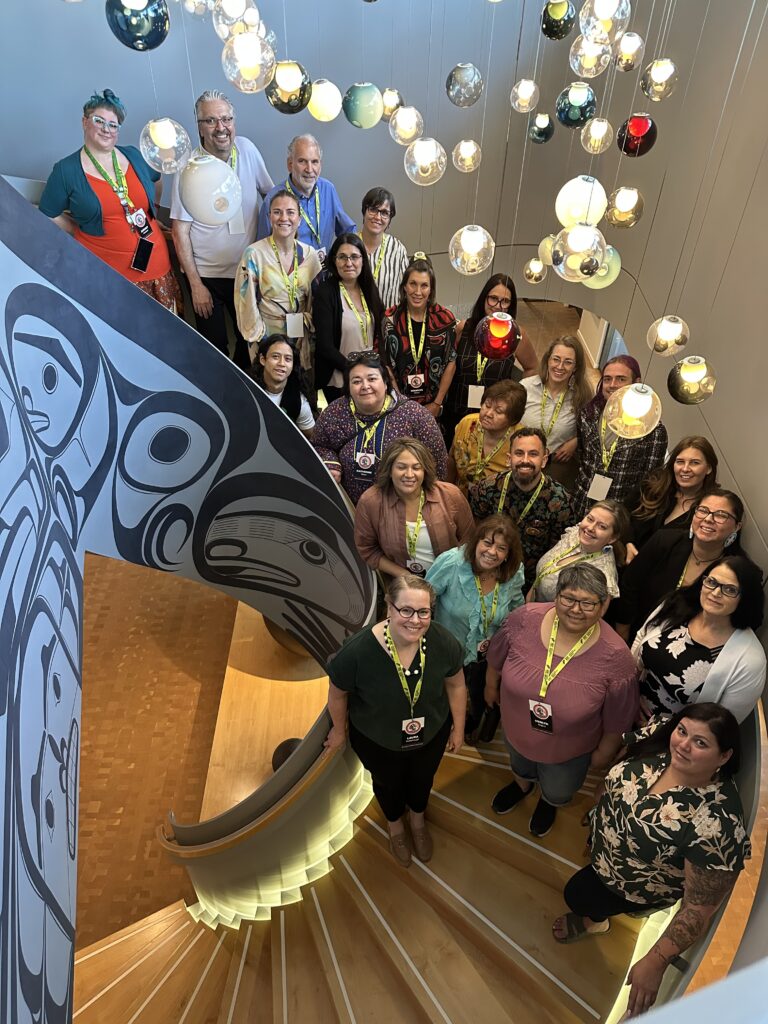
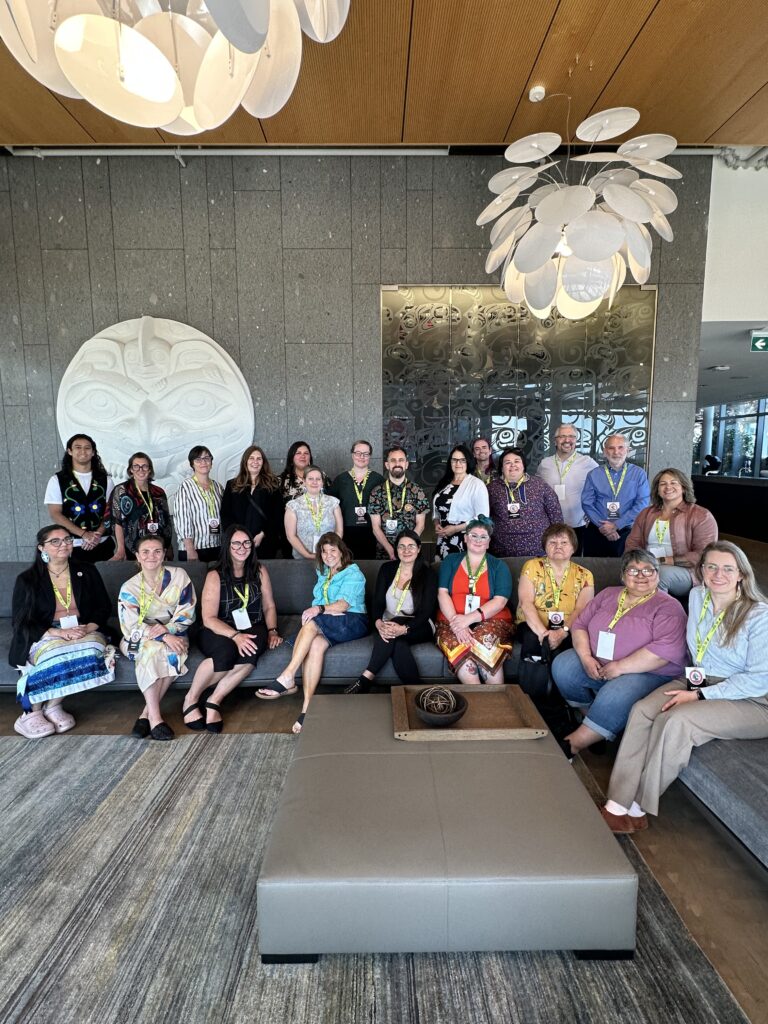
The second day of the Innovative Indigenous Career and Future Skills Symposium (the Symposium) had just wrapped in Vancouver. I was sitting among 35 other attendees on the 34th floor of the TELUS Garden offices, surrounded by original artwork by Indigenous artists, including Tsimshian artist Phil Grey and Haida artists Don Yeomans and Robert Davidson. As we broke bread – or bannock, in this case – with sweeping views of the Rocky Mountains and the Pacific Ocean behind us, we shared stories, reflections, and experiences from the previous two days.
It was in these quieter moments, focused on gathering rather than formal dialogue, that the building of strong, trust-based relationships between Indigenous and non-Indigenous partners was most evident. These moments reminded us that meaningful collaboration is grounded in respect, reciprocity, and taking the time to listen and learn from one another.
Held from May 22–23, 2025, the Symposium brought together leaders from First Nations, Métis, Inuit and Urban Indigenous organizations funded through the Indigenous Skills and Employment Training (ISET) program. They were joined by representatives from the federal government, including Gerald Gosselin, Director General of the Indigenous Affairs Directorate at Employment and Social Development Canada (ESDC), as well as philanthropic foundations committed to advancing Indigenous-led workforce development.
Throughout both days, the gathering was guided by Indigenous cultural protocols and traditional knowledge, beginning with a land acknowledgment and opening song by Elder Deborah Baker, Member of Squamish Nation. As a non-Indigenous organization, the Future Skills Centre works within systems that have historically reflected Western and colonial approaches to policy, research, and funding. The Symposium reinforced that relationship-building between Indigenous and non-Indigenous partners is not a one-time activity or a short-term objective. It is an ongoing responsibility that requires humility, reflection, and sustained commitment, with Indigenous partners setting the pace and direction of the work.
Building on the momentum generated in Vancouver, the Future Skills Centre has partnered with Darian Kovacs, Métis founder of Jelly Marketing and PR, and convener of the 2026 National ISET Gathering, to co-host a Workforce Sector Lunch and an Indigenous Funder’s Dinner in January 2026. These events represent the next step in a relationship-building effort that began at the Symposium, creating space to strengthen relationships, share learnings, and encourage greater alignment across funders, governments, and Indigenous organizations.
In addition, the Future Skills Centre is conducting a program evaluation of the Digital Marketing, AI and Tariff Workforce Readiness Program in close collaboration with the ISET office, continuing our work with Director General Gerald Gosselin and his team. This work reflects a deepening relationship grounded in shared delivery and learning. By combining the Future Skills Centre’s strengths in evaluation and evidence generation with the ISET office’s leadership and community-grounded expertise, we are supporting Indigenous-led workforce development while strengthening system-level learning. This approach underscores a shared commitment to collaboration, accountability, and continuous improvement, and points to the potential for more coordinated and scalable efforts across the ISET network.
These activities are part of Future Skills Centre’s broader Indigenous and Northern Communities portfolio. In addition to relationship development, over the last year, much of this work has involved mobilizing knowledge about the innovative work Indigenous partners are doing. In March 2025, Future Skills Centre’s Insights in Action Tour made its final (virtual) stop in the Yukon and Northwest Territories, where leaders from EntrepreNorth and Yukonstruct shared perspectives on skills development for the North, by the North. Future Skills Centre also hosted a State of Skills webinar, titled Building Economic Resilience: Skills Development in Indigenous and Northern Communities, highlighting insights from our State of Skills report alongside Indigenous and Northern entrepreneurs and small businesses. Future Skills Centre also had the opportunity to convene a policy roundtable with federal policy makers on skills development in Indigenous and Northern communities, co-sponsored by Gerald Gosselin, Director General of the Indigenous Affairs Directorate at Employment and Social Development Canada.
The Future Skills Centre understands reconciliation as an ongoing journey of learning and unlearning. Walking the talk and not just talking the talk means showing up consistently, acting with accountability, and supporting Indigenous-led solutions. This work requires patience, trust, and a long-term commitment to showing up differently than many funders have in the past. Going forward, the Future Skills Centre intends to continue deepening relationships with key partners, identifying opportunities to work together, and ensuring that every meaningful step forward reflects Indigenous priorities, knowledge, and expertise.
To learn more about the Symposium, read the full report here.
The views, thoughts and opinions expressed here are the author’s own and do not necessarily reflect the viewpoint, official policy or position of the Future Skills Centre or any of its staff members or consortium partners.
Related Blog Posts
Is A University Education Worth the Cost? Canadian and U.S. Perspectives
A Tough Job Market for Young People, and a Chance to Rethink the Path Forward