

Skilled Trades
Project
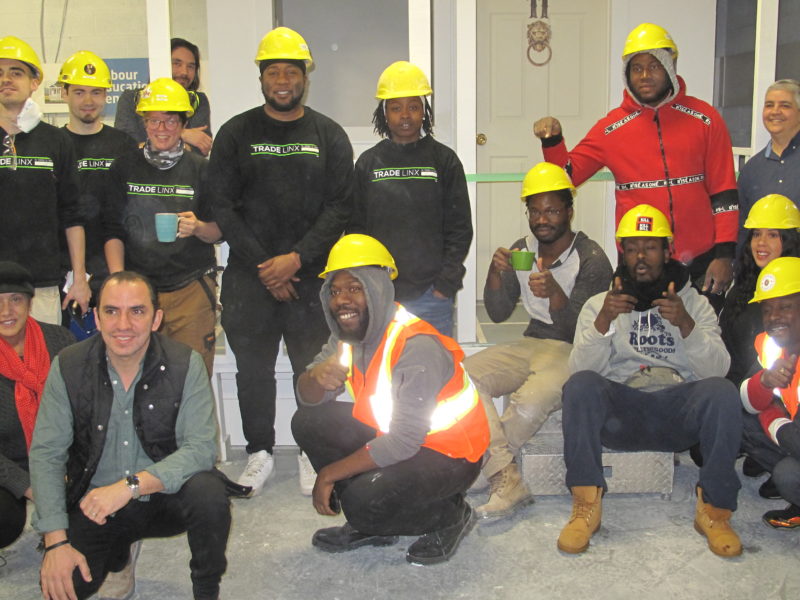
Workforce 2030: Rapid Upskilling for Green-Building Occupations
By 2030, the Canada Green Building Council (CAGBC) estimates that with the appropriate framework and investments in place, the Canadian green-building industry could support approximately 1.5 million direct jobs. In Ontario alone, over 100,000 new construction workers are needed in the next 10 years to keep pace with future demand and retirements.

Project
Beyond hours: Piloting an alternative to tracking and understanding apprentice competency in Canada
The persistence of labour and skill shortages within the trades is exacerbated by challenges with on-the-job training and skills recognition. The prevailing methods to document and formally recognize the skills that apprentices acquire through workplace learning are outdated.

Research
Skills and productivity: Which skills shortages are impacting Canadian productivity?
Canada has a productivity problem. Labour productivity growth—the amount of output produced per hour worked—has stalled. The Canadian economy’s labour productivity at the end of 2023 was around the same as it was in 2017. This is the second time that Canada’s productivity growth has been notably weaker than the United States’ in
recent decades, with the first occurring between 2003 and 2012.

Project
Creating a Microlearning Model for the Canadian Mining Industry
Using an existing competency framework from the Mining Industry Human Resources Council, and extensive input from front-line workers and supervisors, this project developed 10 microlearning modules and accompanying coaching supports on behaviour-based safety and communication.

Project
Skills Matching and Opportunities in Wood Manufacturing
The Wood Manufacturing Council (WMC), with support from the Signal49 Research, launched the Skills Matching and Opportunities in Wood Manufacturing project to address the gap between job seekers’ desires for viable and desirable career transitions and the recruitment challenges faced by the wood manufacturing sector.
Project
Skills, Explore, Achieve, Revive (SOAR)
Have questions about our work? Do you need access to a report in English or French? Please contact communications@fsc-ccf.ca. How to Cite This ReportChan, G.,...

Project
Construct: Building Inclusive Pathways to Employment in the Skilled Trades
The construction sector continues to face skilled labour shortages, while many people experiencing poverty, housing instability, discrimination, or limited access to formal training remain excluded from the kinds of jobs that could support longer-term economic and housing stability. In Ontario, Blue Door Support Services developed Construct to respond to these intersecting issues through a rapid skilled trades training model.
Research
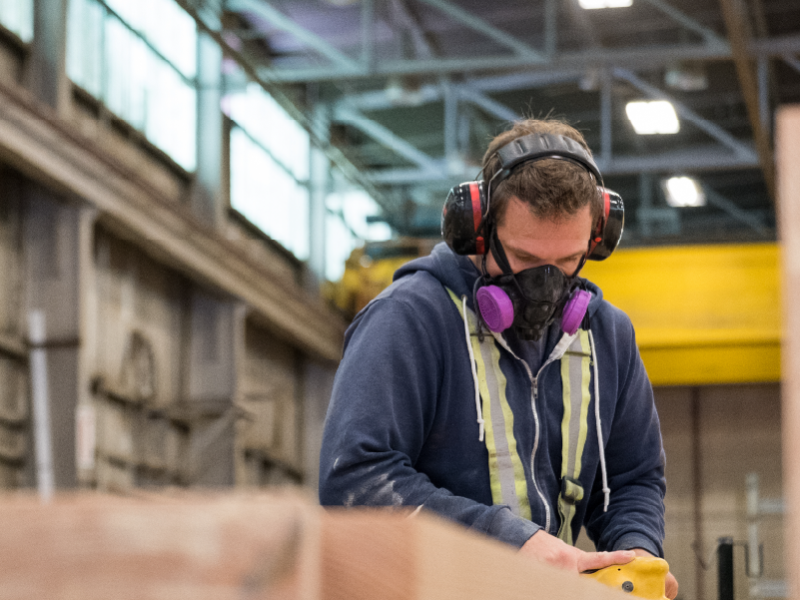
Skills needs for mass timber production and adoption in British Columbia
Stakeholders in British Columbia are exploring the potential of mass timber, an engineered wood product used as a building material, to drive economic growth in a number of industries. A thriving mass timber sector could help generate novel opportunities for many forestry communities (that are currently experiencing a decline), as well as help build sustainable housing in the province.

Project
Building the skills of the trucking industry for the future
Have questions about our work? Do you need access to a report in English or French? Please contact communications@fsc-ccf.ca. How to Cite This ReportNoumi, C.,...