

Youth

Video
How Gen Z is Saying No to Corporate Culture
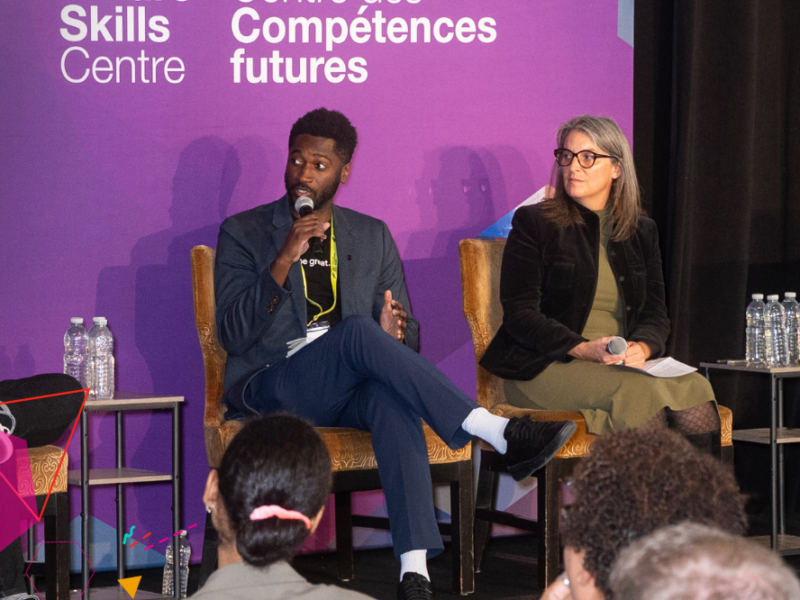
Work hard. Get a promotion. Work harder. Get another promotion. And climb that corporate ladder. That's the script a lot of us grew up with. But according to a 2025 study from Deloitte, that's not what some younger workers are interested in doing. The study found only 6 per cent of Gen Z workers want to move into a leadership position. Instead, they want things like more work/life balance. Flexibility. Mental health. We talk to Tricia Williams, the director of Research, Evaluation, and Knowledge Mobilization at TMU's Future Skills Centre, about how young professionals are redefining the way they work.

Research
Talent Perceptions Study of Economic Growth Sectors in the Calgary Region
Calgary’s economy is poised for significant growth in key sectors like energy transition, technology and health care. However, a critical misalignment threatens this progress: a major disconnect exists between the in-demand occupations, as identified by employers, and the local talent pool’s skills and perceptions.

Research
Impacts of Customization and Wraparound Supports for Digital Skills Upskilling Insights
This report examines the role of wraparound supports in digital skills training programs, specifically for women, newcomers and refugees, and Black youth.

Research
Skills for Infrastructure Innovation
This report examines global and Canadian infrastructure trends, highlights innovative practices (e.g., digitalization, green construction, modular methods, regulatory reforms) and analyzes the implications for the workforce and skills required in the coming years.
Blog
A Future Built on Skills: Why AI Literacy Must Become a Nation-Building Project
Canada is entering a moment that requires us to move together, deliberately and confidently, toward a future shaped by new technologies and new ways of learning.

Research
Scoping a PIAAC Research Agenda: Programme for the International Assessments of Adult Competencies
This project was initiated to develop a Canadian PIAAC research agenda that can guide policymakers, researchers and practitioners in using these new data to close knowledge gaps, enhance policy decisions and improve national performance in skills development.

Project
Project Connect: Professional Project Administrator Program
Indigenous Peoples represent the fastest growing and youngest population in Canada, offering critical potential to address skills shortages. Yet systemic inequities in access to education and training persist, resulting in lower employment outcomes and increased vulnerability to economic downturns.

Project
FUSION: Future Skills Innovation Network for Universities
The program focused on building metacognition (awareness or understanding of one’s own thinking), communication and problem-solving skills through flexible, experiential and reflective learning delivered in co-op programs across humanities, social sciences and STEM disciplines.

Project
Reboot Plus Expansion
The Reboot Plus Expansion program, led by Douglas College and PEERs Employment & Education Resources, aims to re-engage youth aged 17–24 who are at risk of not finishing high school or are unsure of their academic and career trajectories.