Building Big: Aligning Ambition and Action for Canada’s Future
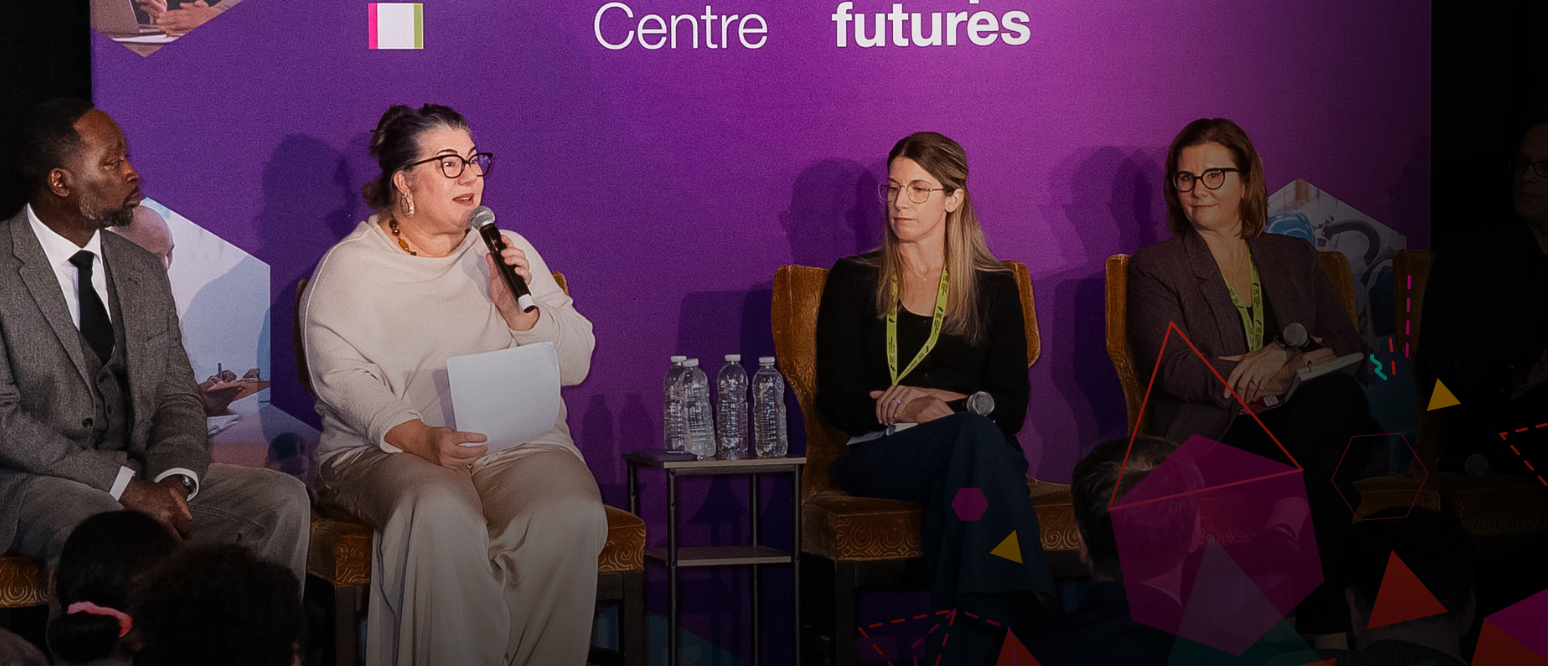
There’s a question that keeps coming up in the conversations I’ve had lately with business leaders, policymakers, labour unions, educators, and community builders: how can we join forces to build the big things Canada needs? This was also the core message I delivered at A Future Built on Skills, where I had the opportunity to join fellow changemakers in a conversation about what it truly means to prepare our workforce for the future.
At Colleges and Institutes Canada (CICan), we represent the institutions that make that skilled workforce training at scale possible. Our public colleges, institutes, CEGEPs, polytechnics and Indigenous institutes of education are present in every corner of the country – anchoring communities large and small, urban and rural, coastal and inland.
Ninety-five percent of Canadians live within 50 kilometres of a college campus. That reach gives our sector an extraordinary role to play in helping Canada navigate one of the biggest workforce (and community) transformations in decades, given the recessionary impact of tariffs in key sectors, aging demographics in many regions and the AI agenda. Ultimately, I’m optimistic. Because when disruption hits, opportunity follows. And right now, that opportunity lies in how we align our ambition with action.
To build homes, infrastructure, and our defence capacity, Canada needs more than investment – We need coordination.
Federal and provincial decisionmakers are working towards a “One Canadian Economy” – I’m all for it. But to do that, we must start with a One Canadian Training and Workforce Strategy – a shared plan that brings educators, industry, labour, and governments around the same table to solve workforce problems together, at scale.
Our members are already doing this work on the ground. In rural, remote, and Indigenous communities, where many of Canada’s major projects are unfolding, colleges and institutes are connecting people to place-based opportunity. Eighty-six percent of First Nations live within 50 kilometres of a college. That means we’re uniquely positioned to support Indigenous-led training, local community growth, and economic reconciliation.
At CICan, we take a challenge-based approach. Whether it’s housing, energy transition, broad-based AI adoption or defence readiness, we ask: What’s the challenge? Who needs to be at the table? And how can we act together to solve it?
Our new College Defence Training and Innovation Network is a great example. Through the network, we’re convening and mobilizing our members to deliver training and upskilling across the country that meets the needs of the Royal Canadian Navy, the Air Force, and others looking to recruit service members and to help members of the military transition successfully into civilian careers.
The truth is, Canada’s public post-secondary system is ready to meet our national ambitions. What we need now is strategic reinvestment, intentional collaboration, and smoother pathways for learners and workers to move across provinces and sectors.
Canada’s future won’t just be built with money or policy, it will be built by people. Skilled, adaptable, and resilient people. And training in a rapid, responsive and industry-partnered way is what our public colleges and institutes do best.
Boldness must meet coordination. Ambition must align with action. And if we get that right, together, we can truly build big.
These remarks were shared at A Future Built on Skills, a national forum convened by the Future Skills Centre.
The views, thoughts and opinions expressed here are the author’s own and do not necessarily reflect the viewpoint, official policy or position of the Future Skills Centre or any of its staff members or consortium partners.
Related Blog Posts
Building a Stronger Evidence Base for Skills: Using Linked Data to Measure Long-Term Outcomes
Why Replication Matters: Expanding What Works Across Canada